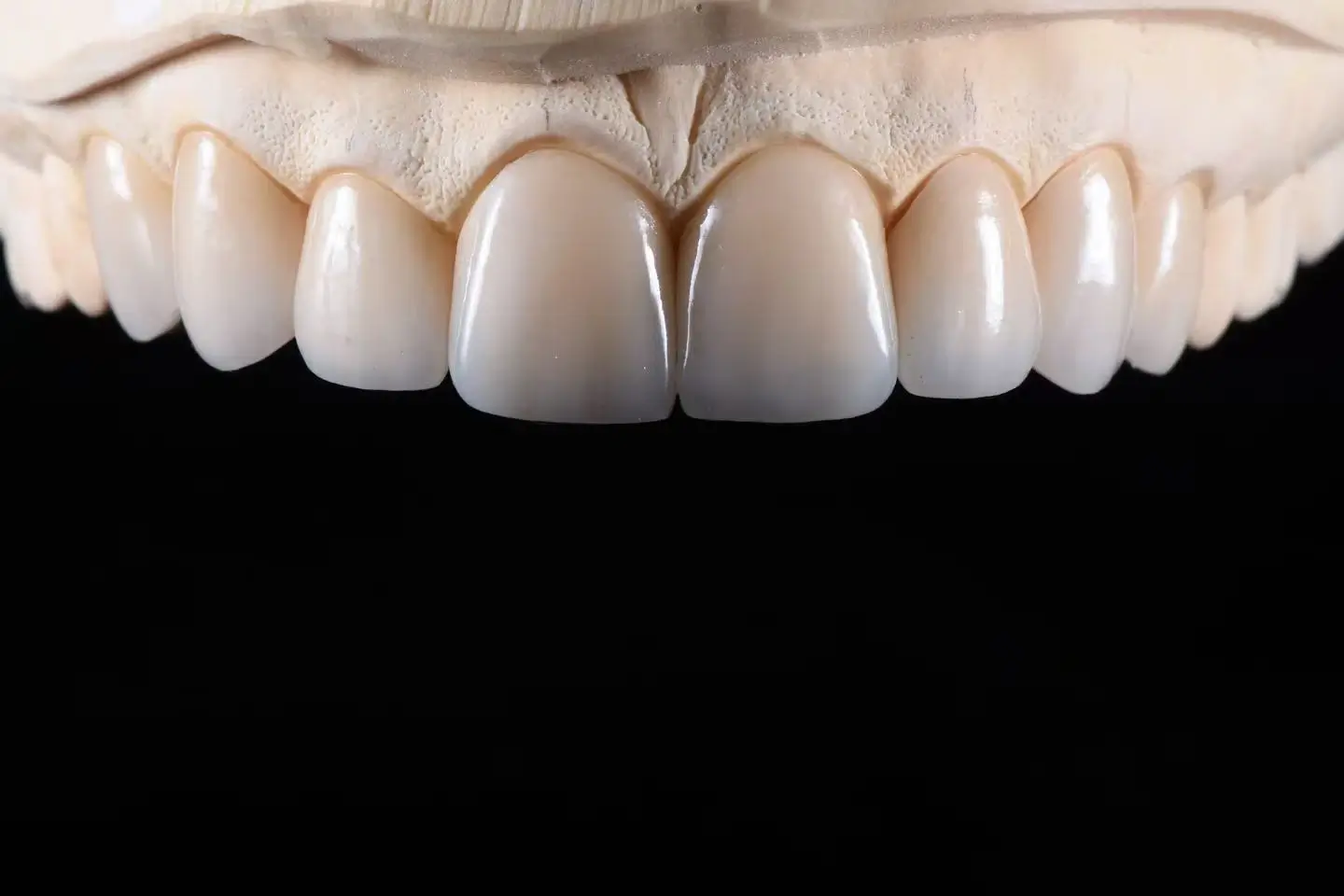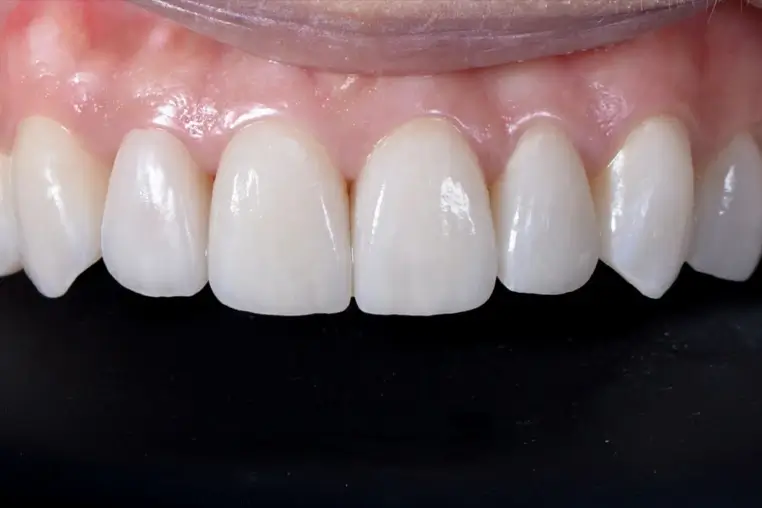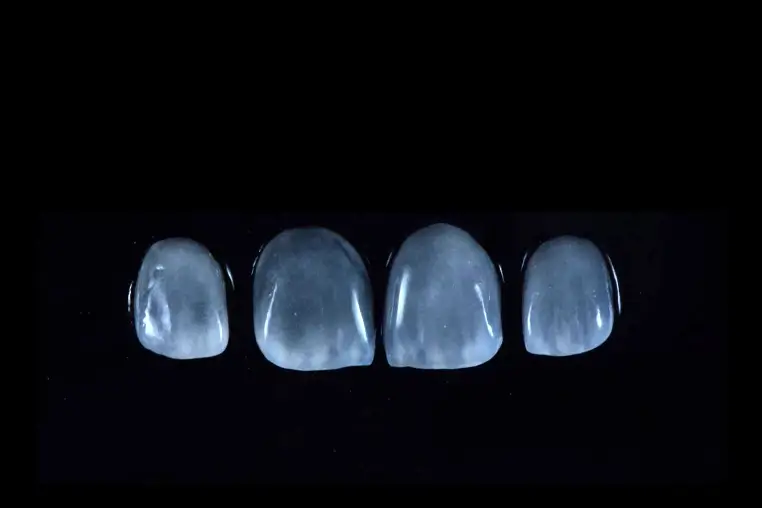
Fixed implant prostheses are changing the way patients and professionals think about tooth replacement. Unlike removable dentures, these restorations stay permanently in the mouth. They feel natural, chew better, and last longer.
At Joydentalab, we manufacture fixed implant prostheses for dental clinics and laboratories every day. We have seen the demand grow rapidly. And we know why: patients want a solution that works like their own teeth.
This article covers everything you need to know about fixed implant prostheses — from types and benefits to clinical workflow and why outsourcing to Joydentalab makes sense for your business.
What Are Fixed Implant Prostheses?
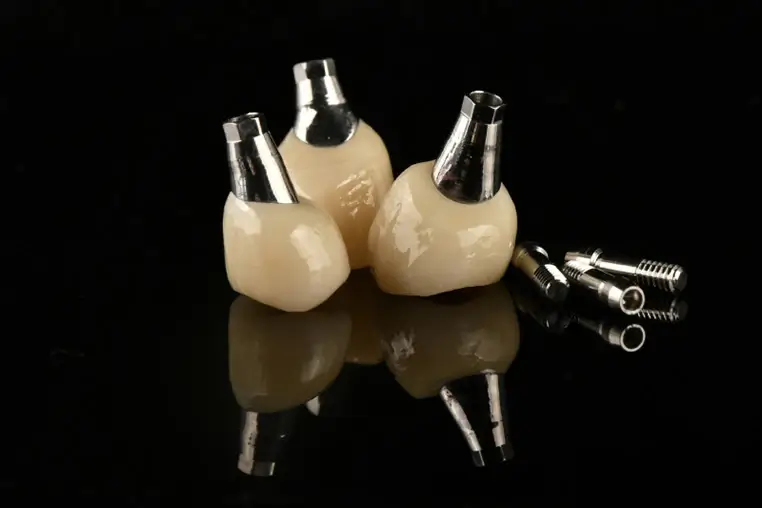
Fixed implant prostheses are restorations that attach permanently to dental implants. The patient cannot remove them. Only a dentist can unscrew or uncement them for maintenance.
Common types include:
- Implant-supported single crown – for one missing tooth
- Implant-supported fixed bridge – for multiple missing teeth, using two or more implants
- Full arch fixed implant prosthesis – replacing all teeth in an arch (often called All‑on‑4, All‑on‑6, or hybrid prosthesis)
These are different from implant-retained overdentures, which patients can snap on and off. With fixed implant prostheses, there is no daily removal. No soaking. No adhesives.
Why Are Fixed Implant Prostheses Gaining Popularity?
From our experience at Joydentalab, the shift toward fixed implant prostheses is driven by three groups: patients, clinics, and labs. Each group has different reasons, but they all point to the same conclusion — fixed is better.
From the patient’s perspective
Patients want comfort and confidence. Fixed implant prostheses deliver both.
- No movement – The prosthesis stays firmly in place during eating, talking, and laughing.
- Natural chewing – Patients can eat steak, apples, nuts, and raw vegetables without fear.
- No embarrassing clicks – Unlike removable dentures, fixed prostheses make no sound.
- Normal speech – No lisping or clicking sounds.
- Easy maintenance – Brush and floss like natural teeth. No nightly removal.
Many patients who start with removable dentures later upgrade to fixed implant prostheses. The difference in quality of life is huge.
From the clinic perspective
For dental clinics, offering fixed implant prostheses means fewer problems and higher patient loyalty.
- Fewer adjustments – A well‑made fixed prosthesis rarely needs post‑delivery adjustments. No sore spots, no rocking.
- Less chair time – The delivery appointment is usually the final one. No repeat visits for relines or rebases.
- Higher case value – Implant restorations generate significantly more revenue than removable cases.
- Better patient retention – Patients who receive fixed implant prostheses stay with your clinic for years.
The only challenge? You need a reliable lab partner who can fabricate these restorations with precision. That’s where joydentalab comes in.
From the laboratory perspective
For dental laboratories, fixed implant prostheses offer higher profitability per case.
- Higher value – One implant-supported bridge can be worth multiple removable partials.
- Lower remake rate – Digital workflows reduce human error.
- Less labour intensity – Once digital design is done, milling and sintering are automated.
However, the equipment barrier is real. A scanner, design software, milling machine, and sintering furnace can cost over $100,000. That’s why many labs choose to outsource fixed implant prostheses to Joydentalab. We become your production department.
Types of Fixed Implant Prostheses
Understanding the different types helps you recommend the right solution to your patients or clients.
1. Implant-Supported Single Crown
Used for a single missing tooth. One implant supports one crown. The crown is either screw‑retained or cemented.
Best for: Patients with one missing tooth and healthy adjacent teeth.
2. Implant-Supported Fixed Bridge
Used for two or more missing teeth in a row. Two or more implants support a bridge. The bridge is fixed — patients cannot remove it.
Best for: Patients missing 2–6 consecutive teeth with adequate bone volume.
3. Full Arch Fixed Implant Prosthesis
Used for patients missing all teeth in an arch. Typically, 4–6 implants support a full arch of teeth. Common names: All‑on‑4, All‑on‑6, hybrid prosthesis, fixed detachable.
Best for: Edentulous patients who want a permanent, non‑removable solution.
How Long Do Fixed Implant Prostheses Last?
This is one of the most common questions from patients and clinics.
- The implant itself can last a lifetime with proper care and no complications.
- The prosthesis (crown/bridge): Typically 10–15 years for zirconia or PFM. Full arch prostheses may last 15–20 years.
- Factors affecting longevity: Oral hygiene, bruxism (teeth grinding), smoking, and regular maintenance visits.
At Joydentalab, we use high‑quality materials and precision manufacturing to maximize the lifespan of every fixed implant prosthesis we make.
Fixed Implant Prostheses vs Removable Overdentures
A common comparison. Here’s the breakdown:
| Feature | Fixed Implant Prosthesis | Implant Retained Overdenture |
|---|---|---|
| Patient removal | No (only dentist can remove) | Yes (patient snaps on/off) |
| Stability | Excellent – no movement | Good – some movement |
| Chewing efficiency | 80–95% | 50–70% |
| Daily maintenance | Brush and floss | Remove, clean, soak overnight |
| Bone preservation | Excellent (implants stimulate bone) | Good (less stimulation than fixed) |
| Patient satisfaction | Very high | Moderate to high |
For most patients, fixed implant prostheses provide a better long‑term experience. The only downside is higher upfront treatment time and cost — but patients who choose fixed rarely regret it.
The Clinical Workflow for Fixed Implant Prostheses
For clinics and labs, understanding the workflow helps you plan cases and set expectations.
Step 1: Patient assessment and implant placement
Place implants (healing period 3–6 months for conventional loading)
Evaluate bone volume and health
Step 2: Impression or digital scan
Send to the lab with a prescription
After osseointegration, take an impression or an intraoral scan
Step 1: Patient assessment and implant placement
- Evaluate bone volume and health
- Place implants (healing period 3–6 months for conventional loading)
Step 2: Impression or digital scan
- After osseointegration, take an impression or an intraoral scan
- Send to the lab with a prescription
Step 3: Lab fabrication (this is where Joydentalab helps)
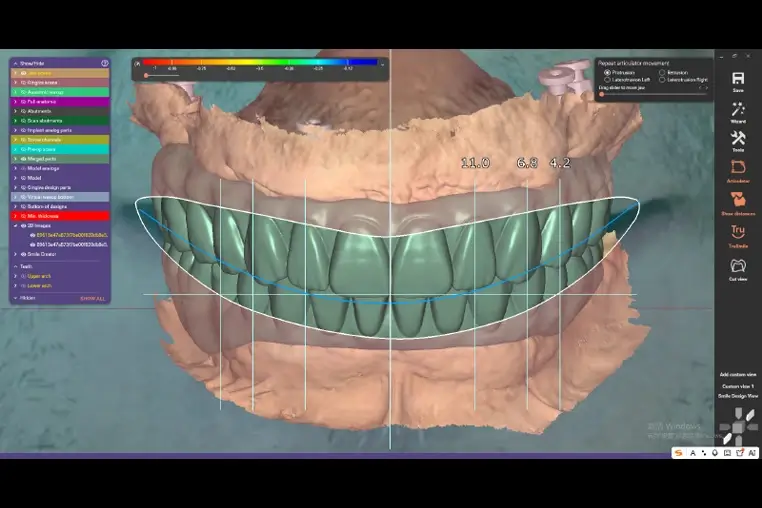
- Design the prosthesis using CAD software
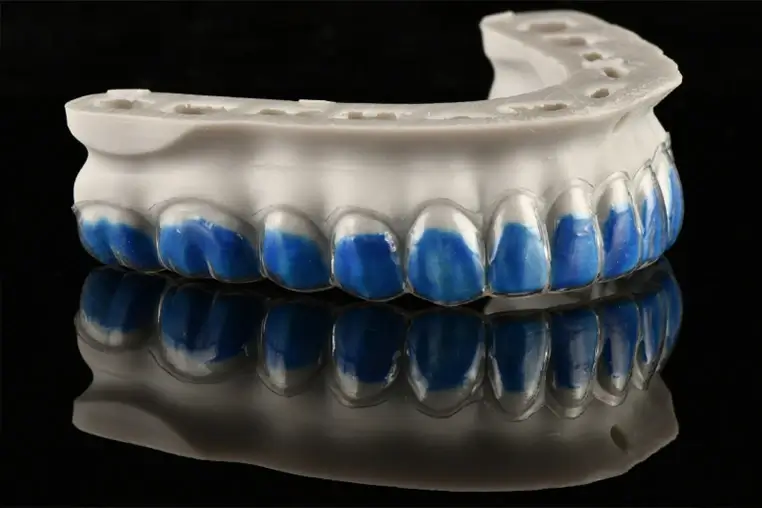
- Mill or print the framework and teeth
- Apply a ceramic or zirconia layering
- Finish and polish
Step 4: Try‑in and delivery
- Verify fit and occlusion
- Screw or cement permanently
- Final occlusal check
Outsourcing to Joydentalab saves you three steps 3. You send the scan, and we return a finished restoration ready for delivery.
Materials Used for Fixed Implant Prostheses
Choosing the right material affects esthetics, strength, and longevity.
| Material | Best for | Pros | Cons |
|---|---|---|---|
| Zirconia (monolithic) | Full arch, posterior bridges | Strong, biocompatible, esthetic | Hard on opposing teeth if not polished |
| Multilayer zirconia | Anterior and full arch | Natural translucency, no layering needed | Higher cost |
| Lithium disilicate (e.max) | Single crowns, anterior bridges | Excellent esthetics | Weaker than zirconia, not for molars |
| PFM (porcelain fused to metal) | Single crowns, short bridges | Proven, cost‑effective | Metal margin visible over time |
| Titanium framework + acrylic | Full arch hybrid | Strong framework, replaceable teeth | Acrylic wears faster |
At Joydentalab, we work with all these materials. Our technical team can advise you on the best choice for each case.
How to Clean and Maintain Fixed Implant Prostheses
Patients often ask: “How do I keep them clean?”
The answer is simple:
- Brush twice daily with a soft toothbrush
- Floss around the prosthesis using superfloss or floss threaders
- Use a water flosser (optional but helpful)
- Visit the dentist every 6–12 months for a professional cleaning
Unlike removable dentures, there is no nightly soaking, no adhesive, and no risk of dropping and breaking the prosthesis.
Common Questions About Fixed Implant Prostheses
Q: What are fixed implant prostheses?
A: Fixed implant prostheses are restorations that attach permanently to dental implants. Only a dentist can remove them.
Q: Can fixed implant prostheses be removed by the patient?
No. Unlike overdentures, fixed prostheses are screw‑retained or cemented. Only a dentist can remove them.
Q: How many implants are needed for a fixed prosthesis?
- Single crown: 1 implant
- Fixed bridge: 2–4 implants, depending on span
- Full arch: typically 4–6 implants (All‑on‑4, All‑on‑6)
Q: Are fixed implant prostheses permanent?
The implants are designed to last a lifetime. The prosthesis (teeth) may need replacement after 10–15 years of normal wear.
Q: Can I eat normally with fixed implant prostheses?
Yes. Most patients can eat steak, apples, nuts, and other hard foods without worry.
Q: Do fixed implant prostheses affect speech?
No. In fact, they improve speech compared to removable dentures. No clicking, no lisping.
Q: What is the success rate?
Clinical studies show 95%+ 10‑year survival rates for fixed implant prostheses when properly maintained.
Q: Can everyone get fixed implant prostheses?
Most patients are candidates, but adequate bone volume and good general health are required. Some patients may need bone grafting first.
Q: How long does the entire process take?
From implant placement to final delivery: typically 4–9 months, depending on healing time and lab fabrication.
Why Outsource Fixed Implant Prostheses to Joydentalab?
We are a dental manufacturing partner, not a competitor. You keep your client relationships. We handle the precision work.
What we offer:
- No equipment investment – We have the scanners, mills, and sintering furnaces.
- Fast turnaround – 5–7 business days standard. Rush 3‑day available.
- Quality guarantee – Every restoration is inspected before shipping. 90‑day warranty.
- Wide material range – Zirconia, multilayer zirconia, e.max, PFM, titanium frameworks.
- Free technical support – Material recommendations, design advice, occlusion checks.
How to start: Send us a case – single crown, bridge, or full arch. We’ll quote and deliver. No long‑term commitment needed.
Final Thoughts
Fixed implant prostheses are the gold standard for tooth replacement. Patients love them. Clinics benefit from fewer problems and higher loyalty. Labs can increase profitability by outsourcing the manufacturing.
At Joydentalab, we make it easy for you to offer fixed implant prostheses without the overhead. Contact us with your next case.
References
- American Dental Association (ADA). Dental Implants: What You Should Know.
🔗 https://www.ada.org/resources/research/science-and-research-institute/oral-health-topics/dental-implants - Pjetursson BE, Thoma D, Jung R, Zwahlen M, Zembic A. A systematic review of the survival and complication rates of implant‑supported fixed dental prostheses (FDPs) after a mean observation period of at least 5 years. Clinical Oral Implants Research. 2012;23 Suppl 6:22‑38.
🔗 DOI: https://doi.org/10.1111/j.1600-0501.2012.02553.x - Moraschini V, Poubel LA, Ferreira VF, Barboza Edos S. Evaluation of survival and success rates of dental implants reported in longitudinal studies with a follow‑up period of at least 10 years: a systematic review. International Journal of Oral & Maxillofacial Surgery. 2015;44(3):377‑388.
🔗 DOI: https://doi.org/10.1016/j.ijom.2014.10.023 - National Institute of Dental and Craniofacial Research (NIDCR). Tooth Loss and Implants.
🔗 https://www.nidcr.nih.gov/health-info/tooth-loss - Bidra AS, Rungruanganunt P, Gauthier M. Clinical outcomes of implant‑supported fixed prostheses with monolithic zirconia frameworks: a systematic review. Journal of Prosthetic Dentistry. 2021;126(5):632‑640.
🔗 DOI: https://doi.org/10.1016/j.prosdent.2020.08.041