Orthodontic treatment continues to evolve alongside digital dentistry. Among the technologies that significantly improve bracket placement accuracy, indirect bonding trays have become a widely adopted solution in modern orthodontic workflows.
At JoyDentalab, one of China’s leading dental laboratories specializing in global outsourcing services, we frequently collaborate with dental laboratories and orthodontic clinics to manufacture high-precision indirect bonding trays. Through advanced digital workflows, CAD design, and 3D printing technologies, indirect bonding systems allow orthodontists to reduce chair time while achieving predictable treatment outcomes.
This article explores the clinical value, manufacturing process, digital design principles, and laboratory best practices behind orthodontic indirect bonding trays, helping dental professionals understand how optimized lab collaboration can improve orthodontic efficiency.
Understanding Indirect Bonding Trays in Orthodontics
What Are Indirect Bonding Trays?
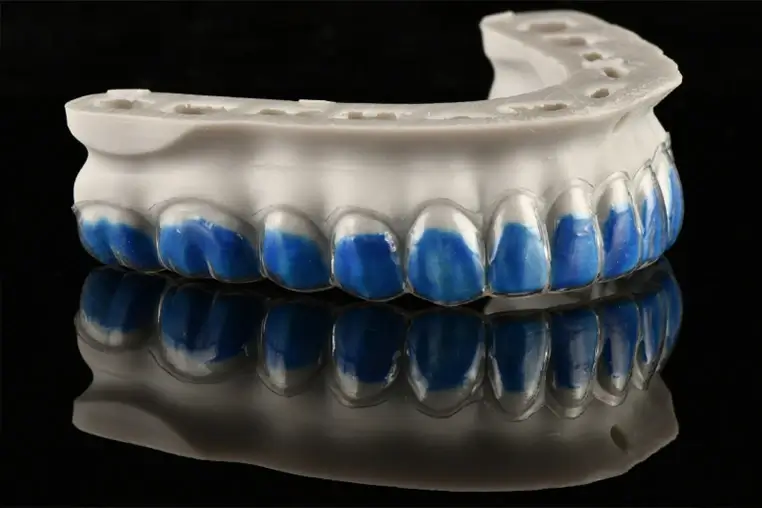
Indirect bonding trays are custom orthodontic transfer devices used to accurately position brackets on a patient’s teeth. Instead of placing each bracket directly in the mouth, brackets are first positioned on a dental model or digital setup, and then transferred to the patient using a custom-made tray.
This technique allows orthodontists to achieve:
- Highly precise bracket positioning
- Reduced clinical bonding time
- Consistent treatment planning outcomes
Indirect bonding is particularly valuable for complex orthodontic cases, where accurate bracket positioning directly influences tooth movement efficiency.
Evolution of Indirect Bonding Techniques
Indirect bonding techniques were first introduced in orthodontics in the 1970s as an alternative to manual bracket placement. Traditional methods relied on stone models and silicone transfer trays, requiring significant manual skill.
Today, digital dentistry has transformed this workflow through:
- intraoral scanning
- CAD orthodontic software
- 3D printed models
- digital bracket positioning systems
These innovations have improved both manufacturing accuracy and clinical efficiency, making indirect bonding trays a core component of modern orthodontic practice.
Why Indirect Bonding Trays Matter in Modern Orthodontics
Improving Bracket Placement Accuracy
Bracket positioning directly determines how teeth move during orthodontic treatment. Even small deviations may affect treatment outcomes.
Indirect bonding trays allow orthodontists to:
- Position brackets in a controlled laboratory environment
- Use digital simulations to verify placement
- Transfer brackets precisely to the patient’s dentition
This level of precision is difficult to achieve consistently with traditional direct bonding techniques.
Reducing Chair Time for Orthodontic Procedures
Another major advantage is clinical efficiency. With indirect bonding:
- Brackets are positioned before the appointment
- The orthodontist simply seats the transfer tray
- Multiple brackets bond simultaneously
This significantly reduces chair time, improving workflow efficiency for busy orthodontic clinics.
Enhancing Treatment Predictability
Because bracket placement can be digitally planned, orthodontists can simulate treatment outcomes before bonding begins.
Digital indirect bonding workflows help achieve:
- predictable tooth movement
- improved treatment planning
- fewer bracket repositioning appointments
Materials Used in Indirect Bonding Tray Fabrication
The performance of orthodontic transfer trays depends largely on material selection.
Silicone Transfer Trays
Silicone materials are widely used because they provide:
- flexibility for easy removal
- accurate bracket transfer
- excellent adaptation to tooth surfaces
Silicone trays are often used in dual-layer bonding systems where an inner flexible layer ensures accuracy.
Thermoplastic and Vacuum-Formed Trays
Thermoplastic materials are also popular in orthodontic laboratories.
Advantages include:
- transparency for visual inspection
- ease of fabrication
- lightweight patient-friendly structure
These materials are commonly used in vacuum-formed indirect bonding trays.
3D Printed Orthodontic Transfer Trays
Digital dentistry has introduced 3D printed bonding trays, which offer:
- extremely high dimensional accuracy
- reproducible designs
- rapid laboratory manufacturing
At JoyDentalab, digital orthodontic manufacturing allows us to produce highly customized trays based on digital treatment planning files.
Digital Workflow for Indirect Bonding Tray Manufacturing
Modern orthodontic laboratories increasingly rely on digital orthodontic workflows to fabricate bonding trays.
Step 1: Digital Intraoral Scanning
The process begins with an intraoral scan or digital impression, capturing the patient’s dentition with high accuracy.
These scans are typically exported as STL files, which are then shared with the dental laboratory.
Step 2: Digital Orthodontic Setup
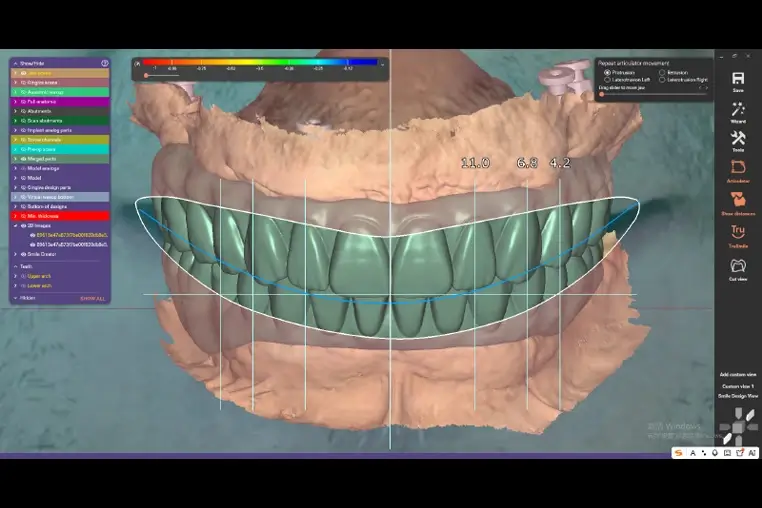
Using orthodontic CAD software, technicians perform virtual bracket placement according to the orthodontist’s prescription.
This stage allows for:
- occlusion analysis
- bracket positioning optimization
- digital treatment simulation
Step 3: CAD Design of the Bonding Tray
Once brackets are positioned digitally, technicians design the transfer tray structure around the brackets.
Key design considerations include:
- tray rigidity and stability
- accurate bracket retention
- easy clinical seating and removal
Step 4: 3D Printing or Vacuum Forming
The final tray may be produced using:
- 3D printing technologies
- vacuum forming systems
- hybrid silicone fabrication
Digital manufacturing allows dental laboratories to achieve consistent production quality.
Best Practices for Successful Indirect Bonding
Accurate Case Records
High-quality digital scans are essential. Incomplete scans or distorted models may compromise bracket positioning accuracy.
Clear Communication Between Clinic and Laboratory
Orthodontic clinics should provide detailed information such as:
- bracket prescription
- archwire sequence
- bonding protocol
Effective communication ensures the laboratory can fabricate trays that meet the orthodontist’s clinical expectations.
Quality Control in Dental Laboratory Production
Professional laboratories implement strict quality control protocols, including:
- digital verification of bracket positions
- model inspection before fabrication
- tray fit testing before shipment
At JoyDentalab, each orthodontic appliance undergoes a multi-stage inspection to ensure precision manufacturing.
JoyDentalab Perspective: Why Labs and Clinics Outsource Indirect Bonding Trays
With the rapid growth of digital orthodontics, many dental laboratories and orthodontic clinics choose to outsource orthodontic appliance manufacturing to specialized laboratories.
From our experience at JoyDentalab, outsourcing provides several advantages:
Access to Advanced Manufacturing Technology
Professional laboratories invest in:
- industrial-grade 3D printers
- orthodontic CAD software
- high-precision digital workflows
This allows clinics to access advanced technology without large capital investments.
Experienced Orthodontic Technicians
Indirect bonding trays require technical expertise in orthodontic appliance design. Skilled technicians ensure bracket transfer accuracy and tray stability.
Faster Production Turnaround
Global dental laboratories with large production capacity can deliver trays quickly, helping clinics maintain efficient treatment schedules.
Consistent Manufacturing Quality
Standardized workflows and experienced technicians ensure repeatable production quality across multiple cases.
Future Trends in Indirect Bonding Technology
The future of orthodontic indirect bonding is closely connected with digital dentistry.
Key emerging trends include:
AI-Assisted Bracket Placement
Artificial intelligence may assist orthodontists in determining optimal bracket positioning based on treatment simulations.
Fully Digital Orthodontic Workflows
Complete digital workflows—from intraoral scanning to 3D printed trays—are becoming increasingly common.
Automation in Orthodontic Appliance Manufacturing
Advanced automation technologies will allow laboratories to produce orthodontic appliances faster while maintaining high precision.
Conclusion
Indirect bonding trays have become an essential component of modern orthodontic treatment. By improving bracket placement accuracy, reducing chair time, and supporting digital treatment planning, they significantly enhance orthodontic efficiency.
As digital dentistry continues to advance, collaboration between orthodontic clinics and specialized dental laboratories will play an increasingly important role in delivering precise and predictable orthodontic solutions.
At JoyDentalab, we are committed to supporting dental laboratories and orthodontic clinics worldwide through high-precision manufacturing, digital orthodontic workflows, and reliable outsourcing solutions.
References
- Indirect Bonding in Orthodontics – Clinical Overview
https://pubmed.ncbi.nlm.nih.gov/21803259/ - Digital Orthodontics and Indirect Bonding Techniques
https://www.ncbi.nlm.nih.gov/pmc/articles/PMC6218880/ - Applications of 3D Printing in Dentistry
https://www.sciencedirect.com/science/article/pii/S0300571221001865 - American Association of Orthodontists Clinical Resources
https://www.aaoinfo.org/