
Why Night Guards Are Essential in Modern Dental Practice
Night guards have become an essential solution for protecting teeth from damage caused by bruxism, clenching, and other occlusal disorders. As digital dentistry continues to evolve, the manufacturing and customization of dental night guards have advanced significantly, offering improved precision, durability, and patient comfort.
For dental clinics and orthodontic practices, providing high-quality night guards is not only about patient protection but also about long-term treatment success. Many modern dental laboratories now rely on digital workflows and CAD/CAM technologies to produce highly accurate custom night guards that fit seamlessly into the patient’s occlusal system.
At JoyDentalab, we work closely with dental laboratories and clinics worldwide to manufacture high-precision orthodontic appliances and protective dental devices. Our experience in digital dental manufacturing allows us to provide scalable outsourcing solutions for night guards, orthodontic appliances, and other custom dental restorations.
This article explores the role of night guards in dentistry, their manufacturing processes, materials, digital workflows, and how dental laboratories can optimize production efficiency through professional outsourcing partnerships.
Understanding Night Guards in Dentistry
What Are Night Guards?
Night guards, also known as dental night guards, occlusal guards, or bruxism splints, are removable dental appliances designed to protect teeth from grinding or clenching during sleep.
They are typically fabricated from durable thermoplastic materials and are custom-designed to fit over the upper or lower dental arch. By creating a protective barrier between the teeth, night guards prevent excessive enamel wear, tooth fractures, jaw discomfort, and temporomandibular joint stress.
According to research published by the National Institutes of Health, sleep bruxism affects a significant percentage of adults and can lead to severe dental complications if untreated.
Night guards help address several dental concerns, including:
- Sleep bruxism and teeth grinding
- Jaw clenching during sleep
- Tooth wear and enamel erosion
- Temporomandibular joint discomfort
- Post-orthodontic stabilization in certain cases
Types of Dental Night Guards
Hard Night Guards
Hard night guards are fabricated using rigid acrylic materials. They are typically recommended for patients with severe bruxism or strong jaw clenching.
Advantages include:
- High durability
- Excellent occlusal stability
- Long service life
- Effective protection against heavy grinding
Because of their strength, hard occlusal guards are frequently manufactured by professional dental laboratories using precision milling or pressure-forming techniques.
Soft Night Guards
Soft night guards are made from flexible thermoplastic materials and are usually recommended for patients with mild bruxism.
Benefits include:
- Comfortable fit
- Easy adaptation for first-time users
- Lightweight design
However, soft guards may wear faster when used by patients with severe grinding habits.
Dual-Layer Night Guards
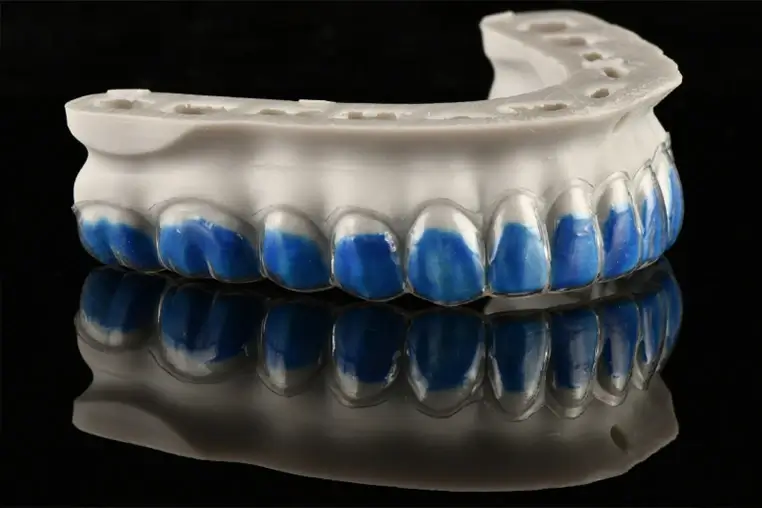
Dual-laminate night guards combine a soft inner layer with a hard outer layer, providing both comfort and durability.
These appliances are particularly popular in modern dental clinics because they offer:
- Improved patient comfort
- Better shock absorption
- Higher resistance to heavy grinding forces
Digital dental laboratories frequently manufacture dual-layer night guards using advanced thermoforming equipment.
Digital Workflow in Night Guard Manufacturing
Intraoral Scanning and Digital Impressions
Modern dental practices increasingly use intraoral scanners to capture precise digital impressions of the patient’s dentition.
Digital impressions offer several advantages:
- Higher accuracy than traditional molds
- Faster data transfer to dental laboratories
- Reduced patient discomfort
- Improved reproducibility
Once captured, the scan files (commonly STL format) can be transmitted directly to the dental laboratory for appliance design and production.
CAD Design of Custom Night Guards
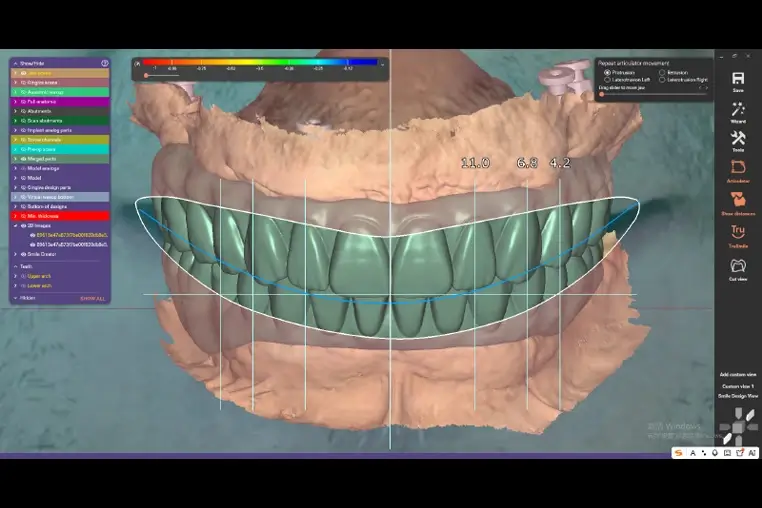
Using dental CAD software, technicians can digitally design night guards tailored to each patient’s occlusal anatomy.
Digital design allows technicians to:
- Adjust occlusal contacts
- Optimize thickness distribution
- Improve appliance retention
- Simulate jaw movement
This process ensures that the final appliance offers optimal protection and comfort.
CAD/CAM and 3D Manufacturing
After the design phase, the appliance can be fabricated using several modern technologies:
Thermoforming
The most common production method involves thermoforming high-strength plastic sheets over a dental model.
CNC Milling
High-precision milling machines can produce durable night guards from specialized PMMA or polymer materials.
3D Printing
In recent years, 3D printing technologies have enabled the fabrication of highly accurate occlusal splints and night guards.
These digital workflows improve both manufacturing efficiency and appliance accuracy.
Clinical Applications of Night Guards
Night guards are widely used across multiple dental disciplines.
Bruxism Treatment
The primary use of night guards is to protect teeth from grinding damage caused by sleep bruxism.
They distribute occlusal forces and prevent enamel wear.
Protection After Restorative Dentistry
Night guards are frequently prescribed for patients who have undergone treatments such as:
- Veneers
- Crowns
- Implant restorations
- Full mouth rehabilitation
These restorations require protection from excessive occlusal forces.
Orthodontic Protection
In orthodontic cases, night guards can help stabilize occlusion after treatment or protect teeth during transitional phases of therapy.
Dental laboratories often fabricate these appliances as part of comprehensive orthodontic treatment planning.
JoyDentalab Perspective: Manufacturing Night Guards for Global Dental Clinics
As a top dental laboratory in China, JoyDentalab provides outsourced manufacturing solutions for dental clinics and laboratories worldwide.
Our night guard production workflow includes:
- Digital case evaluation
- CAD design by experienced technicians
- High-precision thermoforming and milling
- Strict quality control inspection
We support dental laboratories that want to outsource night guard production while maintaining consistent quality and predictable turnaround times.
Through advanced digital dentistry technologies and skilled technicians, we help partners reduce production costs and improve operational efficiency.
Our laboratory infrastructure includes:
- CAD/CAM dental design systems
- Industrial thermoforming equipment
- Digital workflow integration with major intraoral scanners
This allows us to deliver high-quality dental night guards for international dental partners.
Advantages of Laboratory-Manufactured Night Guards
Professionally fabricated night guards offer several advantages compared to over-the-counter products.
Superior Fit
Custom laboratory appliances match the patient’s dental anatomy precisely.
Better Durability
Dental laboratory materials are significantly stronger than store-bought options.
Improved Occlusal Protection
Precise occlusal adjustment ensures balanced bite force distribution.
Higher Patient Comfort
Custom appliances are more comfortable and easier to wear consistently.
Future Trends in Night Guard Manufacturing
Digital Dentistry Integration
Digital workflows will continue to dominate night guard manufacturing as intraoral scanners and CAD software become standard in dental practices.
Advanced Materials
New materials with improved durability, transparency, and flexibility are being developed to enhance patient comfort and appliance longevity.
AI-Assisted Occlusal Design
Artificial intelligence may soon assist dental technicians in optimizing occlusal surfaces for protective appliances.
Global Dental Laboratory Collaboration
Many dental clinics are increasingly partnering with specialized laboratories worldwide to improve efficiency and reduce production costs.
This trend is expected to continue as digital dentistry enables seamless international collaboration.
Conclusion
Night guards play a critical role in protecting teeth, supporting restorative treatments, and managing bruxism in modern dentistry.
With the adoption of digital workflows, CAD/CAM manufacturing, and advanced materials, the production of custom dental night guards has become more precise and efficient than ever before.
For dental laboratories and clinics seeking reliable manufacturing support, partnering with an experienced dental laboratory like JoyDentalab can help streamline production and ensure consistent appliance quality.
As digital dentistry continues to evolve, night guards will remain an essential component of comprehensive dental care and orthodontic solutions.
References
National Institutes of Health – Bruxism Research
https://www.ncbi.nlm.nih.gov
American Dental Association – Bruxism and Occlusal Guards
https://www.ada.org
Digital Dentistry and CAD/CAM Applications
https://www.sciencedirect.com
Dental Splints and Occlusal Guard Therapy
https://pubmed.ncbi.nlm.nih.gov