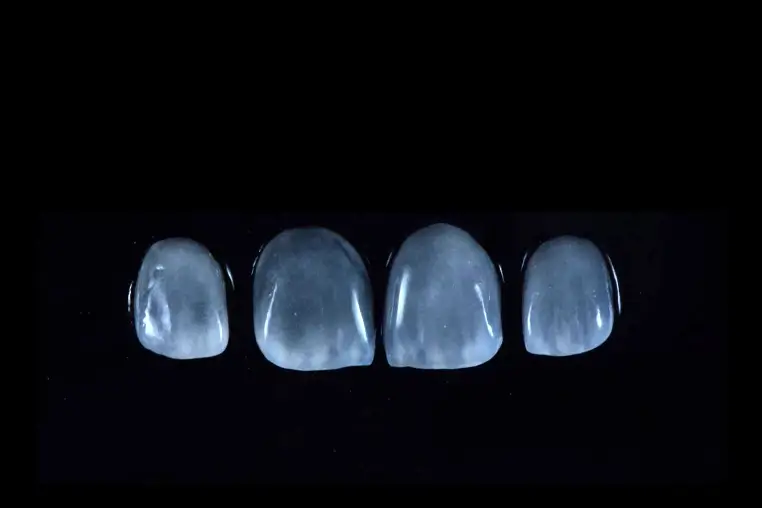
When a tooth suffers moderate decay or structural damage, preserving healthy tooth structure should always be a priority. While direct composite fillings remain a common treatment option, they may not always provide the strength, precision, and longevity required for larger restorations.
Porcelain inlays have become an increasingly popular solution because they combine minimally invasive preparation, excellent aesthetics, and outstanding durability. Unlike conventional fillings that are placed directly into the cavity, porcelain inlays are custom-fabricated outside the mouth and bonded precisely to the prepared tooth.
For dental clinics and laboratories focused on long-term restorative success, porcelain inlays offer an ideal balance between conservation, function, and aesthetics.

What Is a Porcelain Inlay?
A porcelain inlay is an indirect ceramic restoration designed to fit within the cusps of a damaged tooth. It is commonly used when the defect is too large for a traditional filling but does not require the extensive preparation associated with a full crown.
Because the restoration is fabricated separately from the tooth, technicians can achieve far greater accuracy in anatomy, proximal contacts, and occlusal morphology than is typically possible with direct restorative materials.
Once bonded, the inlay becomes an integral part of the tooth structure, restoring both strength and appearance while preserving as much natural enamel as possible.
Why Porcelain Inlays Are Considered a Minimally Invasive Restoration
One of the greatest advantages of porcelain inlays is their conservative treatment philosophy.
Unlike crowns, which often require circumferential reduction of healthy tooth structure, porcelain inlays allow clinicians to remove only the damaged or decayed area. This approach preserves healthy enamel and dentin while maintaining the natural integrity of the tooth.
For patients, this means a restoration that is both functional and biologically conservative. For clinicians, it provides a predictable method of restoring moderate defects without unnecessarily sacrificing healthy tissue.
Aesthetic Advantages of Porcelain Inlays
Modern ceramic materials are capable of reproducing the optical properties of natural enamel with remarkable accuracy.
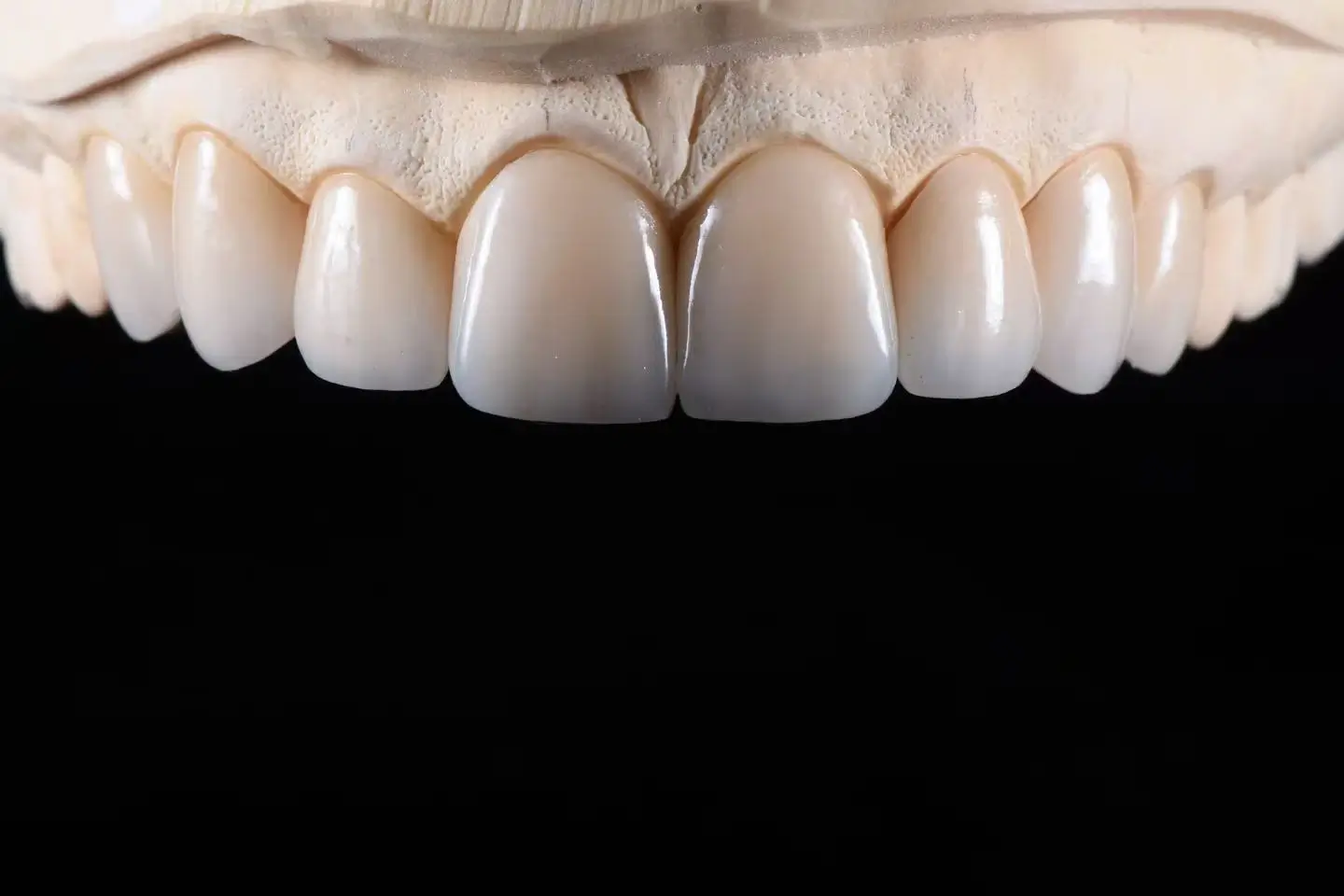
Porcelain inlays offer excellent translucency, color stability, and surface texture. Unlike metal restorations, they do not create dark gingival shadows. Unlike many direct composite restorations, they are highly resistant to staining and wear over time.
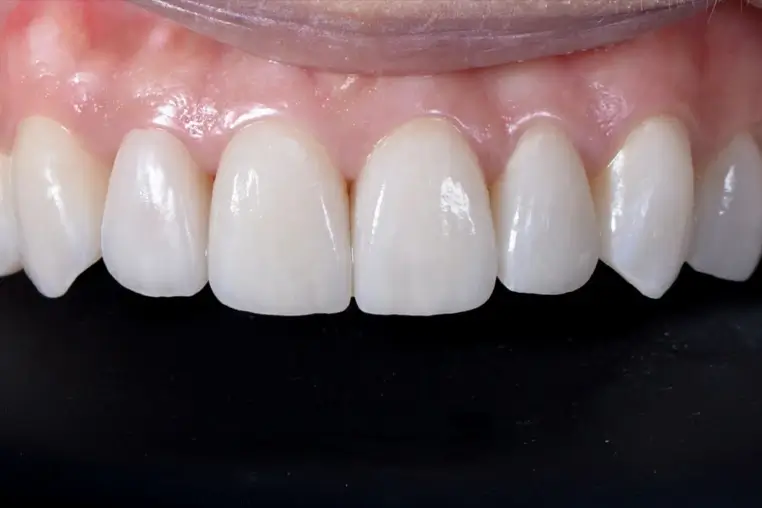
When fabricated by experienced technicians, porcelain inlays blend seamlessly with adjacent teeth and often become virtually invisible once bonded.
This makes them particularly attractive for patients who expect both functional restoration and natural aesthetics.

Porcelain Inlays vs Composite Fillings
Although composite fillings remain a practical treatment option for small restorations, larger defects often place greater demands on the restorative material.
Direct composite restorations may experience polymerization shrinkage, wear, and marginal deterioration over time. Because they are sculpted directly in the mouth, achieving ideal anatomy and contact relationships can also be challenging in more complex cases.
Porcelain inlays, on the other hand, are manufactured under controlled laboratory conditions. This allows technicians to create highly accurate occlusal anatomy, contact points, and marginal adaptation before the restoration is ever placed in the patient’s mouth.
For many posterior restorations, porcelain inlays offer greater long-term stability and predictability than direct composite alternatives.
The Importance of Laboratory Precision
The success of a porcelain inlay depends not only on the clinician’s preparation but also on the quality of laboratory fabrication.
Marginal fit, contact accuracy, occlusal harmony, and anatomical design all play critical roles in the long-term performance of the restoration.
Even a high-quality ceramic material cannot compensate for poor laboratory workmanship. Small inaccuracies at the margin may contribute to cement washout, microleakage, secondary caries, or unnecessary chairside adjustments.
For this reason, choosing the right dental laboratory is often as important as selecting the right restorative material.
Digital Dentistry Has Improved Accuracy—But Is Speed Always Better?
Modern dental laboratories have access to highly advanced CAD/CAM technologies capable of producing ceramic restorations quickly and efficiently.
Many porcelain inlays today are manufactured entirely through digital design and milling workflows. While these systems provide excellent consistency and shorter production times, speed should not always be the primary objective.
At Joydenta Lab, we believe that the ultimate goal is not simply faster production, but superior clinical outcomes.
For this reason, we offer both CAD/CAM-milled ceramic inlays and traditional pressed ceramic inlays. The appropriate manufacturing method is selected based on the clinical requirements of each case.
Why We Prefer Hand-Waxed Pressed Ceramic Inlays for Premium Cases
For highly demanding restorative cases, our technicians often recommend the traditional hand-waxed pressed ceramic technique.
Although this process requires additional technical expertise and production time, it allows a level of precision and anatomical refinement that many laboratories believe remains difficult to replicate through fully automated workflows alone.
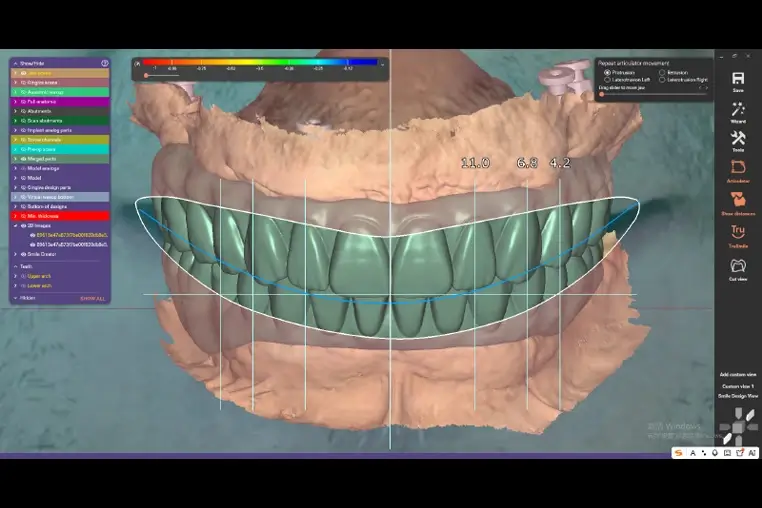
The process begins when the clinic submits an intraoral scan file, clinical photographs, and treatment information. After reviewing the digital data, our design team creates a highly accurate digital model and produces a physical working model through 3D printing.
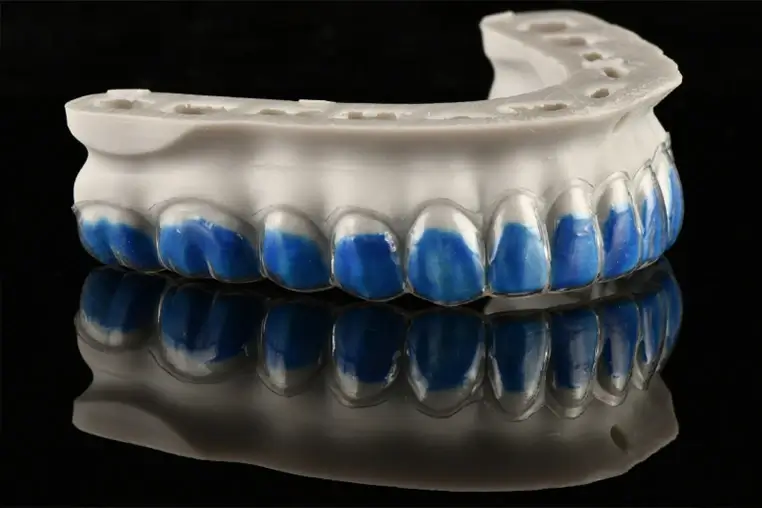
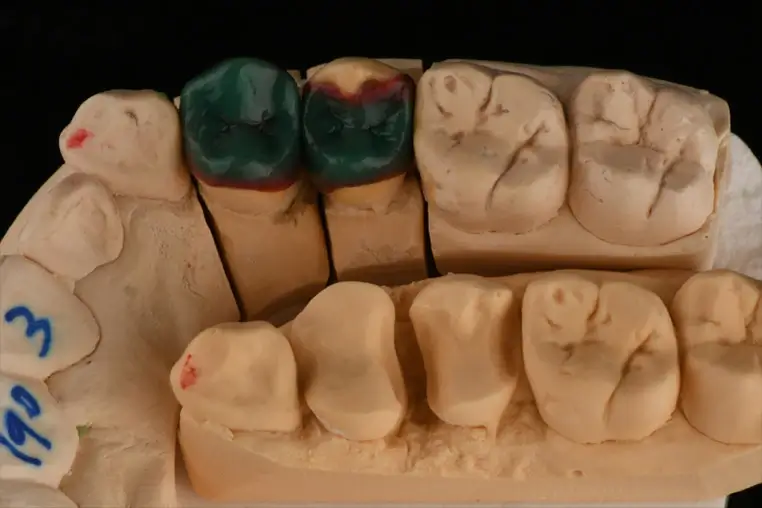
Rather than immediately milling the restoration, an experienced technician carefully builds the inlay by hand using dental wax directly on the printed model. Every cusp, groove, contact point, and occlusal surface is individually sculpted to reproduce natural tooth anatomy.
Once the wax pattern has been completed, sprues are attached, and the restoration is invested in a specialized refractory material. The wax is eliminated during burnout, creating a precise mold that faithfully reproduces every detail of the original wax-up.
A ceramic ingot is then pressed into the mold under carefully controlled temperature and pressure conditions. This pressing process allows the ceramic material to flow into even the most intricate areas of the restoration, producing highly accurate margins and internal fit surfaces.
After pressing, the investment material is removed, and the restoration is recovered. Technicians then perform contour refinement, contact adjustment, characterization, glazing, and polishing to achieve optimal aesthetics and function.
Finally, each restoration undergoes comprehensive quality control to verify marginal integrity, contact accuracy, occlusion, shade, and overall craftsmanship before shipment.
While this workflow is more labor-intensive than standard milling, we believe the additional effort is worthwhile when the objective is achieving superior fit, long-term stability, and predictable clinical performance.

Why Clinics Choose Joydenta Lab
Joydenta Lab specializes in high-quality ceramic restorations for dental clinics and laboratories worldwide.
Founded by two senior dental technicians with more than 20 years of experience, our laboratory combines advanced digital workflows with traditional craftsmanship to deliver restorations that prioritize precision, aesthetics, and long-term success.
Our capabilities include porcelain inlays, ceramic onlays, zirconia restorations, lithium disilicate crowns, implant prosthetics, and digital design services. Supported by FDA, ISO 13485, MHRA, MDL, Medsafe, and MDSAP-compliant workflows, we help our partners reduce remakes, improve efficiency, and achieve predictable restorative outcomes.
Conclusion
Porcelain inlays represent one of the most conservative and aesthetically pleasing methods for restoring moderately damaged teeth. Their ability to preserve healthy tooth structure while delivering excellent strength and natural appearance makes them a valuable treatment option for modern restorative dentistry.
However, the long-term success of an inlay depends heavily on how it is manufactured. By combining digital technology with meticulous hand-crafted techniques, dental laboratories can achieve restorations that offer exceptional fit, function, and longevity.
At Joydenta Lab, we continue to believe that precision matters. While technology improves efficiency, craftsmanship remains essential for producing restorations that truly stand the test of time.