

Zirconia Crown
Zirconia Crown Manufacturing for Dental Laboratories
High-precision CAD/CAM zirconia crowns with stable fit, aesthetics, and scalable production.
Open STL / All major scanners supported
ISO / CE-compliant zirconia materials
Dedicated QC for fixed restorations
The Evolution of Fixed Prostheses: High-Performance Zirconia Crowns
Zirconia crowns are high-performance all-ceramic fixed prostheses crafted from zirconium dioxide (ZrO₂). In restorative dentistry, they have become the modern gold standard for permanently restoring the structural integrity and aesthetics of damaged teeth.
Unlike removable prosthetics, these restorations are engineered for precision and can be cemented or screw-retained. They function as standalone units or as foundational components for complex multi-unit bridges and implant-supported systems. For dental laboratories worldwide, zirconia offers the ultimate synergy between biocompatibility and CAD/CAM processing efficiency.

Military-Grade Yttria-Stabilized
We utilize premium zirconia blocks from Aidite, UPCERA, and Wieland, featuring optimized yttrium oxide content to ensure a perfect balance between phase stability and aging resistance. Compatible with top brands such as Ivoclar and Argen.
High Flexural Strength
Our zirconia restorations range in hardness from 800 MPa (ultra-translucent white) to 1450 MPa (solid white), engineered to withstand the most demanding occlusal forces in the posterior region.
<30µm Marginal Accuracy
JoyDentalLab employs advanced 5-axis CAD/CAM milling technology, ensuring marginal fit precision below 30 microns and significantly reducing chairside adjustment time for clinical clients.
Types of Zirconia Crowns
Zirconia crowns are manufactured through CAD/CAM digital workflows, where intraoral scans or laboratory scan data are transformed into highly precise restorations. Depending on functional demands, aesthetic expectations, and clinical positioning, zirconia crowns can be classified into three main types, each serving distinct prosthetic indications.
Monolithic zirconia crowns are milled from a single, solid block of zirconia without any veneering porcelain. This design maximizes material integrity and eliminates the risk of porcelain chipping.
Key characteristics:
Extremely high flexural strength, ideal for heavy occlusal loads
Excellent fracture resistance for posterior restorations
Minimal material thickness allows for conservative tooth preparation
Stained and glazed for color customization without compromising strength
Typical indications:
Posterior molars and premolars
Bruxism cases
Implant-supported crowns where occlusal forces are concentrated
From a laboratory standpoint, monolithic zirconia crowns offer predictable outcomes, shorter production cycles, and high consistency, making them a cost-effective and reliable fixed prosthetic solution.

Layered zirconia crowns consist of a zirconia coping that is partially or fully veneered with feldspathic or porcelain ceramic to enhance esthetics. This structure allows for superior optical properties while maintaining a strong zirconia core.
Key characteristics:
Enhanced translucency, depth, and natural color gradients
Superior aesthetic integration in the anterior zone
Custom hand-layering by experienced ceramic technicians
Slightly reduced fracture resistance compared to monolithic designs
Typical indications:
Anterior single crowns
High smile line cases
Patients with strong aesthetic demands
While layered zirconia crowns deliver exceptional visual results, they require precise design, controlled occlusion, and proper case selection to minimize the risk of veneer chipping.
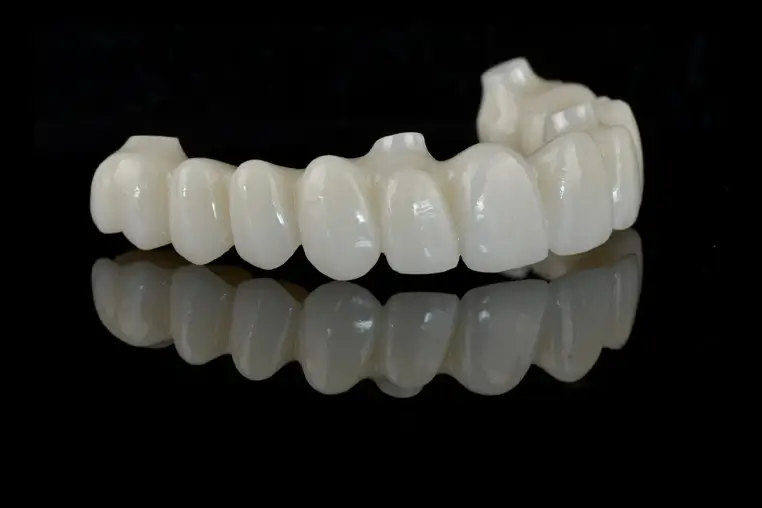
Cut-back zirconia crowns represent a hybrid approach between monolithic strength and layered aesthetics. The crown is initially designed as a full-contour zirconia restoration, then selectively reduced (cut back) in aesthetic zones to allow porcelain layering.
Key characteristics:
Strong zirconia framework supporting functional areas
Porcelain layering limited to facial or incisal zones
Balanced combination of strength, esthetics, and longevity
Reduced chipping risk compared to fully layered crowns
Typical indications:
Anterior and premolar regions requiring both durability and aesthetics
Multi-unit bridges in the aesthetic zone
Implant-supported crowns, where controlled stress distribution is critical
Cut-back zirconia crowns are often preferred in high-demand cosmetic cases, offering laboratories greater control over both functional design and visual outcomes.

Comparison of Zirconia Crown Types
Using data tables to enable dental technicians to comprehensively compare the three types of zirconia crowns.
| Classification Dimension | Monolithic Zirconia Crowns | Cut-Back Zirconia Crowns | Layered Zirconia Crowns |
|---|---|---|---|
| Structural Composition | 100% solid zirconia, single-material restoration | Zirconia framework with selective porcelain veneering | Zirconia coping with extensive or full porcelain layering |
| Design Starting Point | Full-contour monolithic design | Full-contour design followed by controlled cut-back | Coping-based design (zirconia substructure only) |
| Presence of Veneering Porcelain | ❌ None | ✅ Partial (facial / incisal zones) | ✅ Extensive or full coverage |
| Zirconia’s Role | Primary structure and final contour | Primary load-bearing structure | Internal support framework |
| Porcelain’s Role | Not applicable | Esthetic enhancement only | Dominant esthetic material |
| Flexural Strength | ⭐⭐⭐⭐⭐ (Highest) | ⭐⭐⭐⭐☆ | ⭐⭐⭐ |
| Chipping Risk | Minimal | Low to moderate | Higher (technique-dependent) |
| Aesthetic Potential | Moderate | High | Very high |
| Color Adjustment Method | Staining + glazing | Porcelain layering + staining | Multi-layer porcelain stratification |
| Typical Clinical Indications | Posterior crowns, bruxism cases, implant crowns | Premolars, anterior teeth with functional demand, aesthetic-zone bridges | High-smile-line anterior crowns, cosmetic cases |
| Tooth Preparation Requirement | Minimal reduction | Moderate, balanced reduction | More reduction for porcelain thickness |
| Laboratory Skill Dependency | Low | Medium | High (ceramist-driven) |
| Production Time | Short | Medium | Long |
| Cost Level | Low–medium | Medium | High |
| Long-Term Stability | Excellent | Very good | Variable (case & technique sensitive) |
| Typical Market Positioning | Function-first restorations | Strength–esthetic balance | Aesthetic-driven restorations |
Benefits of Zirconia Crowns in Fixed Prosthodontics
Zirconia crowns have become a cornerstone material in fixed prosthodontics, offering an optimal balance between mechanical strength, biological safety, and digital precision. As an all-ceramic fixed dental prosthesis, zirconia crowns support predictable long-term outcomes across both tooth- and implant-supported restorations.
-
Exceptional Strength and Long-Term Durability
Zirconia crowns exhibit high flexural strength and fracture resistance, allowing them to withstand significant occlusal forces in fixed dental prosthetic applications. This makes zirconia an ideal solution for posterior crowns, multi-unit bridges, and implant-supported restorations, where mechanical stability is critical. From a laboratory perspective, zirconia demonstrates dimensional stability after sintering, ensuring consistent marginal integrity and reliable fit over time.
-
Superior Biocompatibility and Metal-Free Safety
As a metal-free ceramic material, zirconia is highly biocompatible and chemically inert. It does not corrode, release ions, or trigger adverse tissue reactions, making zirconia crowns suitable for patients with metal sensitivities or allergies. In fixed prosthodontics, this biological compatibility supports healthy peri-gingival tissue response, contributing to long-term soft tissue stability around natural teeth and dental implants.
-
Radiopacity for Accurate Diagnosis and Follow-Up
Zirconia crowns are radiopaque, allowing clear visualization on dental radiographs. This property enables clinicians to accurately assess: Marginal adaptation Cement integrity Secondary caries around abutment teeth Unlike some ceramic materials, zirconia does not compromise radiographic interpretation, supporting effective diagnosis and long-term maintenance of fixed restorations.
-
Seamless Integration with Digital CAD/CAM Workflows
Zirconia crowns are fully compatible with digital dentistry workflows, including intraoral scanning, CAD design, and CAM milling. Digital production enhances: Precision of crown fit Reproducibility across cases Reduced turnaround time for dental laboratories This digital compatibility allows laboratories to deliver highly accurate fixed dental prostheses while maintaining consistency across single crowns, bridges, and implant cases.
-
A Reliable Material for Global Fixed Prosthodontic Solutions
Due to their combined advantages in strength, esthetics, biocompatibility, and digital adaptability, zirconia crowns are widely adopted in fixed prosthodontics worldwide. For dental laboratories supporting clinicians across different regions, zirconia offers a predictable, scalable, and clinically trusted solution.
These advantages make zirconia crowns a preferred material choice for fixed dental prostheses in modern restorative dentistry.
Applications of Zirconia Crowns in Restorative Dentistry
Zirconia crowns are widely applied across fixed dental prosthetic treatments, supporting both functional rehabilitation and long-term restorative stability. Their mechanical strength, biological compatibility, and digital adaptability make zirconia an essential material in modern restorative dentistry and fixed prosthodontics.
Single-Tooth Fixed Restorations
Zirconia crowns are commonly used for single-unit fixed restorations on natural teeth, providing a durable and aesthetic solution for structurally compromised teeth. Depending on occlusal demands and esthetic requirements, zirconia crowns may be fabricated as monolithic, cut-back, or layered designs.
Clinical advantages include:
High fracture resistance for long-term function
Precise marginal adaptation through CAD/CAM fabrication
Suitable for both anterior and posterior fixed restorations
This makes zirconia crowns a reliable choice for restoring individual teeth within fixed dental prostheses.
Implant-Supported Fixed Restorations
Zirconia crowns are extensively used in implant-supported fixed dental prostheses, where they can be designed as cement-retained or screw-retained restorations. Their strength and biocompatibility make zirconia suitable for both single implant crowns and multi-unit implant bridges.
Key benefits in implant applications:
Resistance to occlusal stress concentration
Compatibility with customized implant abutments
Clear radiographic visibility for long-term monitoring
Zirconia crowns support predictable outcomes in implant-supported fixed restorations, from posterior implant crowns to full-arch fixed solutions.
Multi-Unit Fixed Bridges
In multi-unit fixed dental bridges, zirconia crowns function as both retainers and pontic frameworks, offering the strength necessary to span multiple missing teeth. Zirconia’s rigidity and dimensional stability allow laboratories to fabricate accurate, passively fitting bridge structures.
Typical applications include:
Short- and medium-span fixed bridges
Posterior bridges requiring high load-bearing capacity
Esthetic-zone bridges using cut-back or layered zirconia
Zirconia bridges provide a balance between structural integrity and esthetic customization in complex fixed prosthetic cases.
Versatile Applications Across Fixed Prosthodontics
Due to their adaptability, zirconia crowns are used across a wide range of fixed prosthodontic indications, including tooth-supported restorations, implant-supported crowns, and complex bridgework. This versatility allows dental laboratories to standardize workflows while meeting diverse clinical requirements.
These applications demonstrate how zirconia crowns support a wide range of fixed dental prostheses in modern restorative dentistry.
Zirconia Crown Cost Comparison by Country
The manufacturing cost of zirconia crowns varies across regions due to differences in labor structure, digital production infrastructure, material sourcing, and regulatory compliance.
Rather than focusing on retail dental fees, the comparison below highlights laboratory manufacturing characteristics in major dental markets.
It helps dental clinics and laboratories understand how production environments influence overall zirconia crown costs.
| Country / Region | Manufacturing Environment | Cost Structure Characteristics |
|---|---|---|
| United States | Highly regulated domestic production | Advanced digital equipment, strict compliance standards, and higher labor costs shape overall manufacturing expenses. |
| United Kingdom | Mature dental laboratory industry | Skilled technicians and regulatory-driven workflows influence production efficiency and laboratory operating costs. |
| Germany | Precision engineering and premium materials | Strong CAD/CAM infrastructure and high-quality zirconia materials contribute to a premium manufacturing environment. |
| Japan | Detail-oriented craftsmanship | Laboratories emphasize precision and quality control, often supported by advanced digital manufacturing systems. |
| China | Integrated large-scale dental manufacturing | Supply chain integration, digital milling centers, and experienced technicians allow efficient production scaling. |
| Vietnam | Emerging dental outsourcing hub | Growing CAD/CAM adoption and competitive production structures support expanding international laboratory partnerships. |
Global Collaboration in Zirconia Crown Manufacturing
Today, dental laboratories and clinics frequently collaborate internationally to balance:
production efficiency
material quality
digital workflow compatibility
turnaround times
This global collaboration model enables clinics to access reliable zirconia crown manufacturing while maintaining high aesthetic and functional standards.
Why Global Dental Labs Choose JoyDentalab
JoyDentalab combines cost efficiency, technical expertise, and global compliance to deliver zirconia crowns that meet international clinical standards—without compromise.
⚙️Optimized Cost Through China’s Integrated Dental Supply Chain
China hosts one of the world’s most complete dental manufacturing ecosystems—from zirconia powder and milling blanks to CAD/CAM equipment and sintering systems.
This integration allows JoyDentalab to control material sourcing, reduce intermediate markups, and maintain consistent quality at competitive prices.
👨🔬Hundreds of Skilled Dental Technicians, Built for Scale and Precision
JoyDentalab employs hundreds of professional dental technicians, with over 80% having more than 10 years of hands-on experience in fixed prosthodontics.
Our team specializes in zirconia crown design, occlusal morphology, margin accuracy, and shade control—ensuring predictable clinical outcomes.
📜Fully Certified for Global Dental Markets
JoyDentalab strictly adheres to international quality and regulatory standards. We hold all major compliance certifications required for global dental outsourcing, including: FDA, MHRA, MDSAP, and ISO Quality Management Systems. These certifications ensure that every zirconia crown meets global regulatory and quality expectations.
Frequently Asked Questions About Zirconia Crown Outsourcing
No. JoyDentalab uses internationally certified zirconia materials and standardized CAD/CAM workflows.
Cost differences are driven by labor efficiency and supply chain integration—not material compromise.
We fabricate monolithic zirconia crowns, cut-back zirconia crowns, and layered zirconia crowns based on functional and aesthetic requirements.
Yes. We support customized design protocols, margin preferences, occlusal schemes, and shade instructions for each partner lab.
Our production complies with FDA, MHRA, MDSAP, and ISO 13485 standards, ensuring global regulatory acceptance.
Through digital case archiving, technician assignment stability, and standardized QC checkpoints for every fixed dental prosthesis.