Introduction

Modern dental laboratories increasingly rely on advanced materials that combine strength, durability, and patient comfort. Among these materials, PEEK has gained significant attention due to its excellent mechanical properties and biocompatibility.
PEEK, scientifically known as Polyether ether ketone, is a high-performance thermoplastic polymer widely used in aerospace, orthopedic implants, and medical engineering. In dentistry, it has become an important alternative to traditional metal frameworks and certain ceramic materials.
At JoyDentalab, we integrate digital design workflows with precision manufacturing technologies to fabricate restorations using modern materials that meet international clinical standards. Through CAD/CAM manufacturing and strict quality control procedures, our laboratory supports dental clinics and dental laboratories worldwide with reliable prosthetic solutions.
This article explores the properties of this advanced polymer, its applications in dental laboratories, and its advantages within modern digital dentistry.
Understanding PEEK as a Dental Material
PEEK belongs to a class of materials known as high-performance engineering polymers. These polymers are designed to maintain structural stability even under demanding mechanical and thermal conditions.
In dental applications, the material offers several characteristics that make it particularly suitable for prosthetic frameworks and implant restorations:
- high fatigue resistance
- excellent chemical stability
- lightweight structure
- resistance to wear and corrosion
- strong compatibility with digital manufacturing
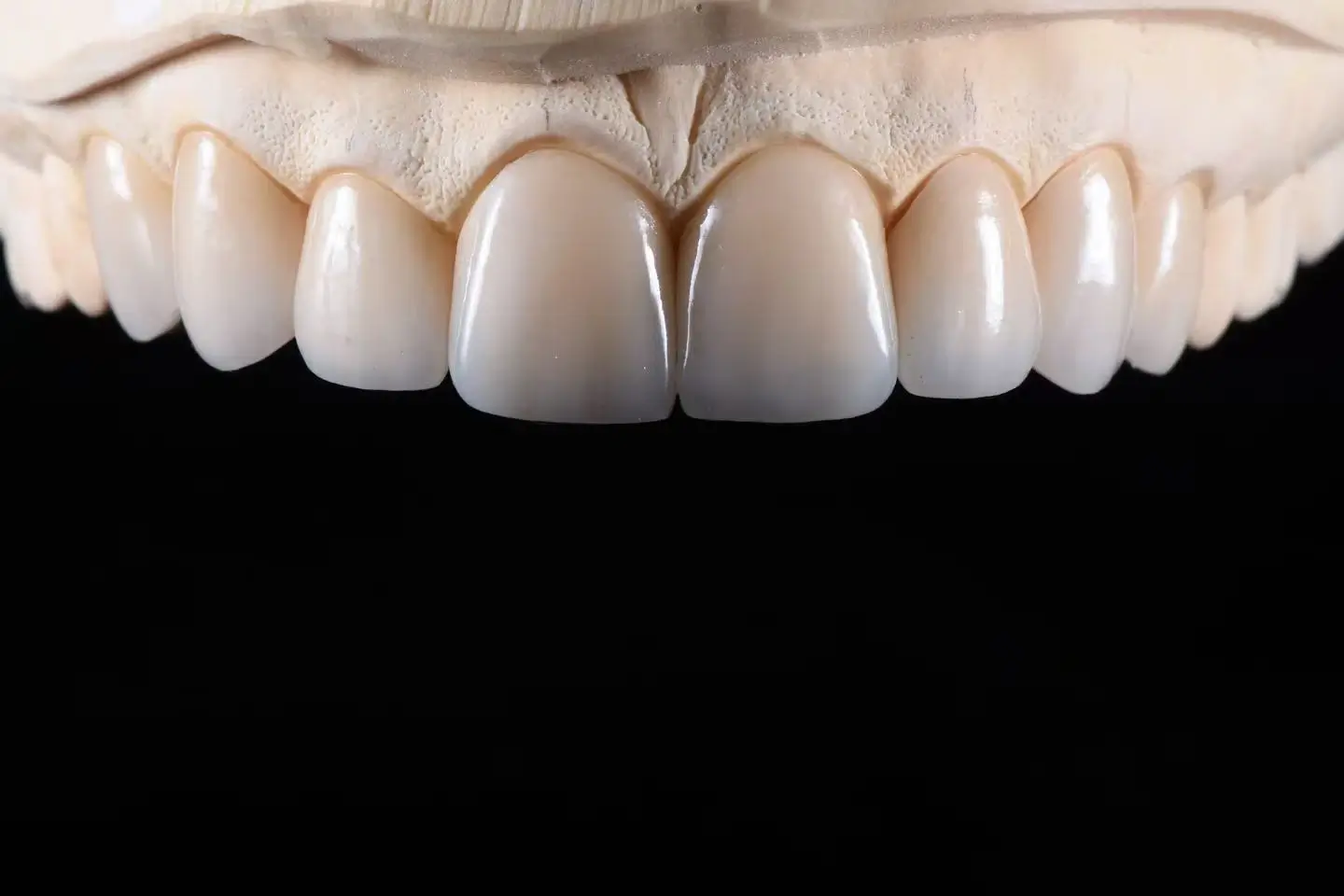
Because of these features, it is increasingly used in metal-free prosthetic designs and implant-supported frameworks.
The adoption of such materials is closely linked with the evolution of Digital dentistry, where advanced CAD design and computer-aided manufacturing technologies enable dental laboratories to fabricate complex restorations with high precision.
Key Properties That Make PEEK Suitable for Dentistry
High Strength and Fatigue Resistance
One of the main reasons this polymer is used in dentistry is its excellent mechanical performance. It can withstand repeated occlusal forces without significant deformation, which is essential for prosthetic frameworks and implant restorations.
Compared with traditional metal frameworks, the material also offers improved shock absorption properties that may help distribute occlusal forces more evenly.
Lightweight Framework Design
Dental restorations made from this polymer are significantly lighter than traditional metal frameworks. This reduction in weight can improve patient comfort, particularly in removable prostheses and large implant-supported restorations.
Lightweight prosthetics can be especially beneficial in full-arch restorations where structural frameworks must balance strength with comfort.
Excellent Biocompatibility
Biocompatibility is critical in dental materials because restorations remain in the oral environment for extended periods. This polymer has shown excellent compatibility with biological tissues and has been widely used in medical implants.
Its chemical stability reduces the risk of corrosion and adverse reactions, making it suitable for long-term prosthetic applications.
Elasticity and Shock Absorption
Unlike rigid ceramic materials, this polymer exhibits a certain degree of elasticity. This property allows it to absorb and distribute occlusal forces more effectively.
In implant restorations, this characteristic may help reduce mechanical stress on implants and surrounding bone structures.
Clinical Applications in Modern Dental Laboratories
Dental laboratories utilize this high-performance polymer in several types of prosthetic solutions.
Implant-Supported Frameworks
One of the most common applications is implant-supported frameworks. The material’s strength and flexibility make it suitable for full-arch implant prosthetics, especially when clinicians require metal-free restorations.
These restorations are commonly used in treatments involving Dental implant therapy.
Removable Partial Denture Frameworks
Removable partial dentures traditionally use metal frameworks. However, polymer-based frameworks are increasingly considered as an alternative due to their lighter weight and improved comfort.
Patients who prefer metal-free prostheses may benefit from this type of material.
Temporary Implant Prostheses
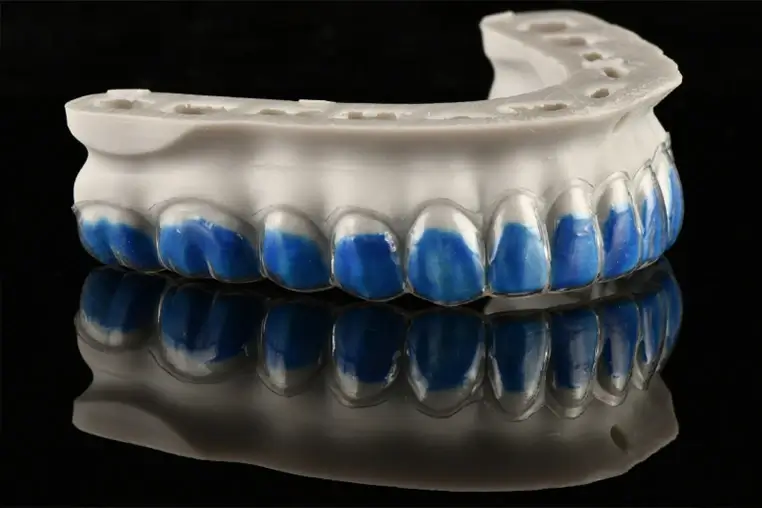
Another application is temporary implant restorations used during healing periods. The material’s durability and machinability allow dental laboratories to fabricate temporary prosthetics that maintain function and aesthetics during treatment.
Full-Arch Restorative Solutions
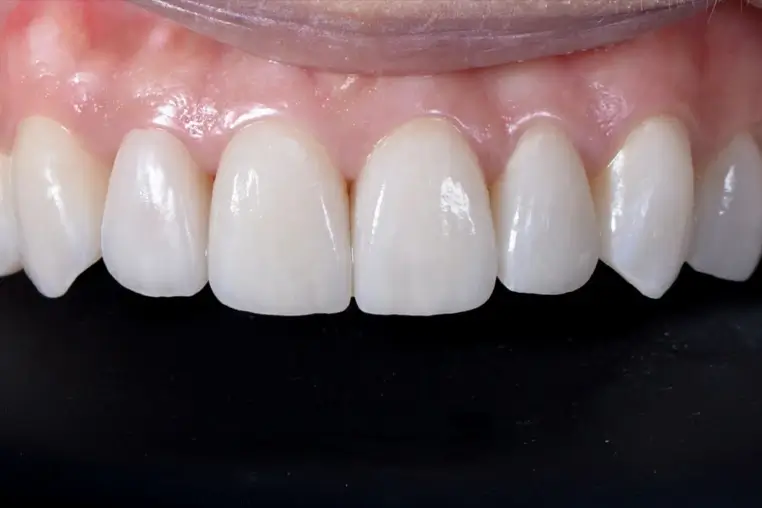
With the rise of digital implant dentistry, laboratories are producing full-arch prosthetic structures that combine lightweight frameworks with aesthetic overlay materials.
These restorations often form part of comprehensive treatment plans for patients requiring full-mouth rehabilitation.
Manufacturing Workflow in Digital Dental Laboratories
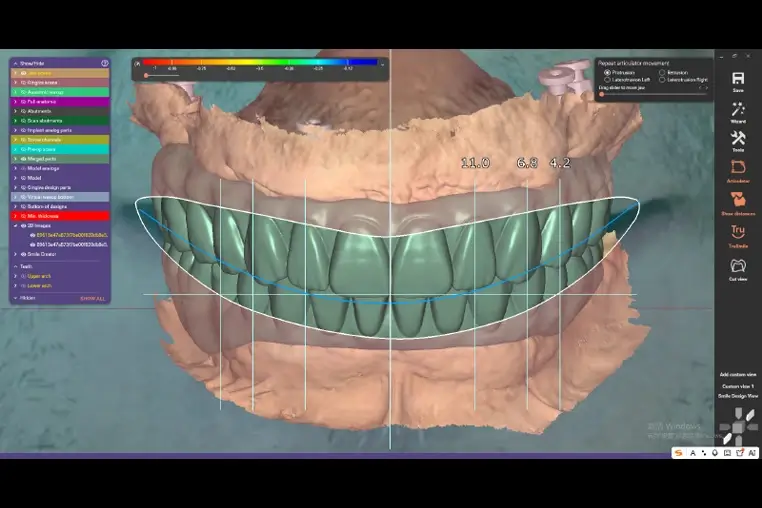
The production of restorations using modern polymer materials relies heavily on digital technology.
Typical laboratory workflow includes:
Digital Scan Data Reception
Dental clinics send intraoral scan files or digital impressions to the laboratory.
CAD Design
Technicians design prosthetic frameworks using advanced CAD software to ensure proper occlusion, fit, and anatomical structure.
Precision Milling
Using computer-controlled milling machines, restorations are manufactured from industrial blocks with high dimensional accuracy.
Finishing and Quality Control
Each restoration undergoes polishing, finishing, and quality inspection before delivery to ensure clinical reliability.
This process is part of the broader Computer-aided manufacturing workflow that has transformed modern dental laboratory production.
JoyDentalab Perspective: When Is PEEK a Suitable Choice?
From a professional dental laboratory perspective, material selection should always depend on the clinical case, restoration design, and functional requirements.
At JoyDentalab, polymer-based frameworks may be considered in situations such as:
- implant-supported prosthetic frameworks
- metal-free removable prostheses
- temporary implant restorations
- lightweight full-arch structures
However, each case requires careful evaluation by both the dentist and the laboratory to determine the most appropriate material.
Collaboration between the clinic and laboratory is essential to ensure optimal outcomes for complex restorative cases.
Material Safety and Regulatory Considerations
Dental materials used in professional laboratories must comply with strict regulatory standards to ensure patient safety.
Many dental materials are manufactured in accordance with regulations from organizations such as:
U.S. Food and Drug Administration
CE marking
These regulatory systems ensure that materials used in dental restorations meet international standards for safety, performance, and traceability.
Conclusion
PEEK has become an increasingly important material in modern dentistry due to its strength, biocompatibility, and compatibility with digital manufacturing technologies. Its unique balance of rigidity and elasticity makes it suitable for a variety of prosthetic applications, particularly implant-supported frameworks and lightweight restorations.
As digital dentistry continues to evolve, advanced materials such as this polymer will likely play a larger role in restorative treatments. Dental laboratories that combine digital workflows with modern materials can provide clinicians with reliable solutions that improve both treatment efficiency and patient outcomes.
At JoyDentalab, our goal is to integrate advanced materials and digital technologies to support dental clinics and laboratories worldwide with high-quality prosthetic manufacturing services.
References
Polyether Ether Ketone – Wikipedia
https://en.wikipedia.org/wiki/Polyether_ether_ketone
Digital Dentistry – Wikipedia
https://en.wikipedia.org/wiki/Digital_dentistry
Dental Implant – Wikipedia
https://en.wikipedia.org/wiki/Dental_implant
Computer-Aided Manufacturing – Wikipedia
https://en.wikipedia.org/wiki/Computer-aided_manufacturing
U.S. Food and Drug Administration – Medical Devices
https://www.fda.gov/medical-devices
CE Marking – European Commission
https://single-market-economy.ec.europa.eu/single-market/ce-marking_en