Digital Dental Laboratories Are Changing Implant Restorations
At Joydenta Lab, we receive digital implant cases every day from dental clinics and dental laboratories across North America, Europe, Australia, and other international markets. As more clinicians adopt intraoral scanners, the traditional workflow based on physical impressions is rapidly being replaced by a fully digital implant workflow.
However, receiving a digital file is only the beginning. The accuracy of a custom abutment depends not only on the scanner itself but also on how the digital dental laboratory evaluates, designs, manufactures, and verifies the restoration before delivery.
Through a combination of intraoral scan verification, CAD/CAM custom abutment design, precision milling, and multi-stage quality control, our team helps clinicians achieve more predictable implant restorations while reducing chairside adjustments and remakes.
Why Intraoral Scan Quality Matters More Than Most Dentists Realize
One of the biggest misconceptions about digital dentistry is that every intraoral scan is immediately ready for manufacturing.
In reality, many of the STL and PLY files we receive contain issues that may not be obvious during chairside scanning. Missing soft tissue details, incomplete scan body capture, insufficient interproximal information, and distorted emergence profiles can all affect the final fit of a custom implant abutment.
As a digital dental laboratory specializing in implant prosthetics, we routinely review incoming scan files before they enter the design stage. This verification process is particularly important for implant-supported restorations because even small deviations in scan body positioning can translate into clinically significant discrepancies at the implant interface.
For example, when working with posterior implant restorations, we occasionally encounter scan files where the implant scan body appears complete visually but lacks sufficient surrounding tissue data for proper emergence profile development. In these situations, our technicians contact the clinic directly to clarify the case before production begins.
This additional verification step may add a few hours to the workflow, but it often prevents costly remakes later.
The Shift From Conventional Impressions to Digital Implant Workflows
For decades, implant restorations relied on physical impressions, stone models, and manual shipping between clinics and laboratories. While these methods remain clinically acceptable, they introduce several variables that can affect accuracy and efficiency.
Modern digital dental laboratories eliminate many of these challenges by accepting intraoral scan files directly from clinicians. Instead of shipping impression materials internationally, clinics can upload files through platforms such as Medit Link, 3Shape Communicate, or iTero.
At Joydenta Lab, we regularly receive digital implant cases through:
- 3Shape TRIOS
- iTero
- Medit
- Alliedstar
- Shining 3D
- Open STL workflows
The ability to receive digital files instantly allows our technicians to begin case evaluation much sooner, helping reduce overall turnaround times for implant-supported restorations.
More importantly, digital workflows create opportunities for direct collaboration between clinicians and technicians. Questions regarding implant positioning, tissue contours, or restorative space can often be resolved before manufacturing begins, leading to more predictable clinical outcomes.
How Our Digital Dental Laboratory Processes Custom Abutment Cases
When a clinic submits a digital implant case to Joydenta Lab, the workflow involves much more than simply sending the file to a milling machine.
The process begins with a comprehensive review of the submitted scan data. Our implant technicians verify scan completeness, implant library compatibility, occlusal relationships, and soft tissue anatomy. Cases that pass verification are transferred into our CAD design environment.
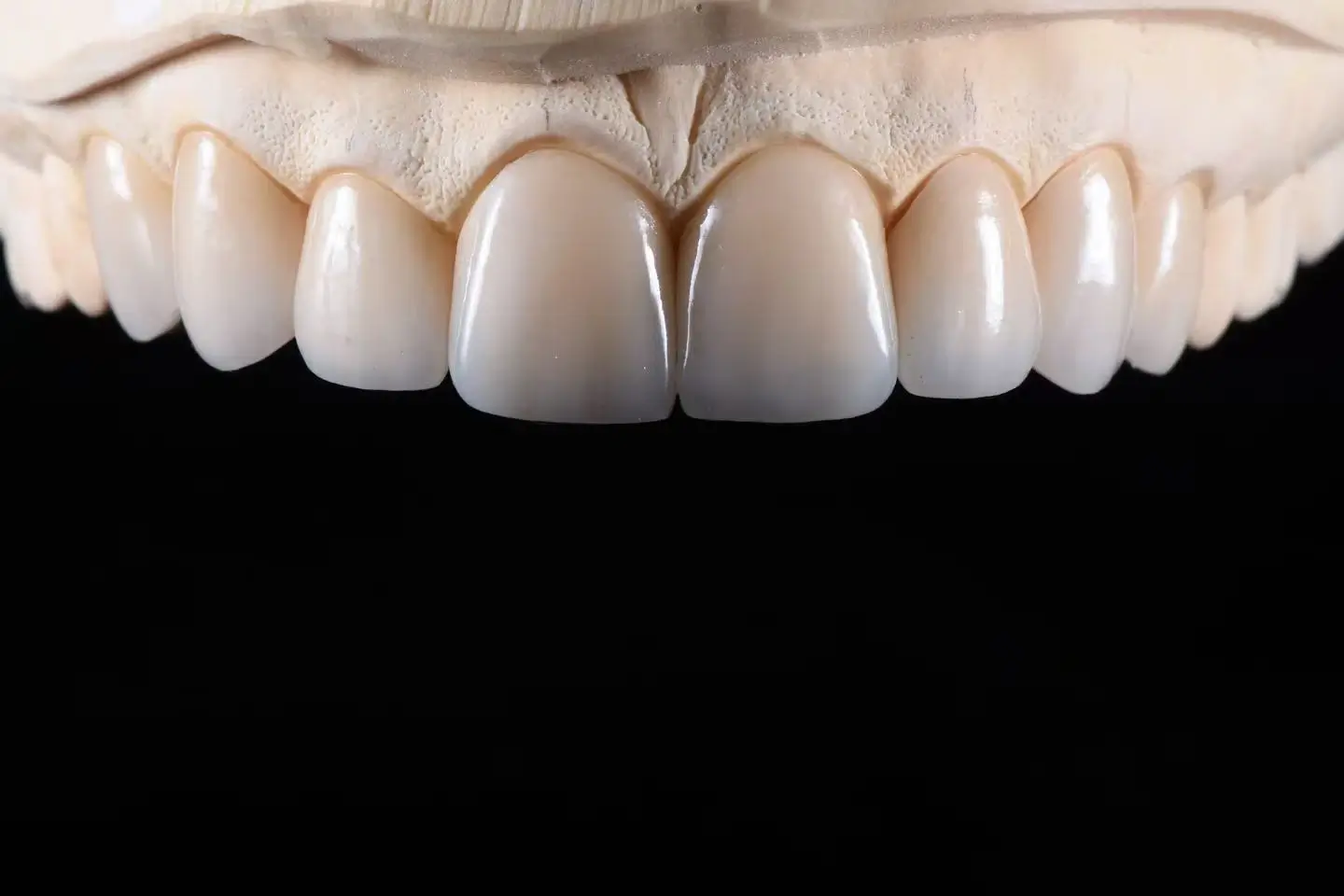
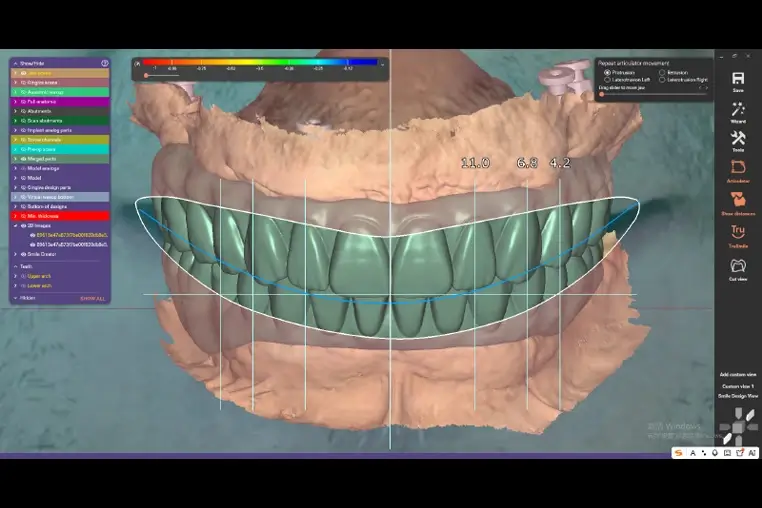
Using Exocad and the 3Shape Dental System, our design team develops a patient-specific custom abutment tailored to the implant position and restorative requirements. Unlike stock abutments, custom abutments allow us to optimize the emergence profile, support peri-implant soft tissues, and improve the final esthetic outcome.
Once the design is finalized, manufacturing is performed using industrial-grade 5-axis milling systems. Depending on the clinical indication, the abutment may be fabricated from titanium, zirconia, or a hybrid titanium-zirconia solution.
Precision milling is only one part of the equation. After production, every custom abutment undergoes multiple quality control procedures. Our technicians inspect critical dimensions, connection accuracy, surface quality, and margin integrity under magnification before the restoration is approved for delivery.
This workflow has been refined through years of producing implant-supported restorations for dental laboratories and clinics worldwide.
Why We Frequently Recommend Custom Abutments Over Stock Abutments
After manufacturing thousands of implant restorations, our team has observed consistent advantages when custom abutments are used in appropriate cases.
Stock abutments provide a standardized solution that can be effective in straightforward situations. However, implant treatment rarely follows a perfectly standardized pattern. Variations in implant angulation, soft tissue thickness, restorative space, and esthetic requirements often demand a more individualized approach.
Custom abutments are particularly beneficial in cases involving:
- Deep implant placement
- Thin gingival biotypes
- Anterior esthetic restorations
- Angulated implant positioning
- Complex implant-supported crowns and bridges
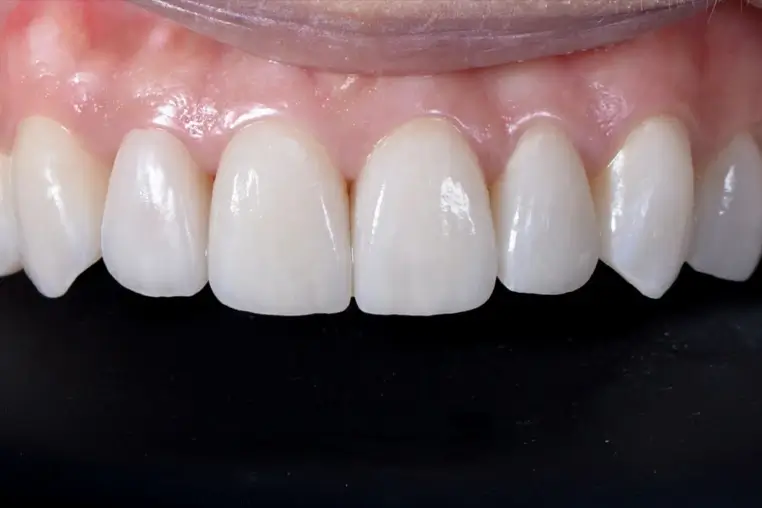
Because the abutment is designed specifically for the patient, it can provide improved tissue support and a more natural emergence profile. This often contributes to better esthetic outcomes and may reduce the amount of chairside modification required during delivery.
Technical Comparison of Custom and Stock Abutments
| Parameter | Custom Abutments | Stock Abutments |
|---|---|---|
| Emergence Profile | Patient-specific | Standardized |
| Soft Tissue Support | Excellent | Limited |
| Margin Placement | Customized | Fixed |
| Esthetic Potential | High | Moderate |
| Implant Angulation Compensation | Excellent | Limited |
| Chairside Adjustments | Usually Minimal | Often Required |
| Long-Term Load Distribution | Optimized | Generic |
While every case should be evaluated individually, custom abutments often provide a more predictable restorative foundation for implant-supported prosthetics.
A Real Example From Our Daily Production Workflow
Recently, an overseas dental clinic submitted a digital case involving a single implant restoration in the maxillary anterior region.
At first glance, the intraoral scan appeared clinically acceptable. However, during our verification process, one of our implant technicians noticed a slight discrepancy between the scan body orientation and the corresponding implant library position.
Rather than proceeding immediately to manufacturing, we contacted the clinic and requested additional verification images. After reviewing the supplementary information, the clinician confirmed that the scan body had not been fully seated during the original scan.
The issue was corrected before the design stage.
As a result, the final custom abutment and zirconia crown achieved passive seating with minimal chairside adjustment. More importantly, a potential remake was avoided.
Cases like this illustrate why digital implant workflows still require experienced technicians behind the technology. Software and scanners are valuable tools, but clinical success ultimately depends on proper case evaluation and communication.
What Clinics Should Look for When Choosing a Digital Dental Laboratory
As digital dentistry continues to expand, many laboratories now advertise digital services. However, not all digital dental labs provide the same level of implant expertise.
When selecting a digital dental laboratory for custom abutment manufacturing, clinicians should consider several factors:
First, verify whether the laboratory has experience with implant-supported restorations rather than simply crown and bridge production.
Second, evaluate whether the laboratory performs manual scan verification instead of relying entirely on automated software workflows.
Third, assess the laboratory’s ability to communicate directly with clinicians when questions arise regarding scan quality or implant positioning.
Finally, consider the laboratory’s manufacturing capabilities, quality control procedures, and experience working with international digital workflows.
At Joydenta Lab, these principles guide every implant case we produce.
Frequently Asked Questions
What is the turnaround time for digital dental laboratory services?
Turnaround time depends on restoration type, material selection, and shipping destination. For most custom abutment cases, production begins immediately after scan verification and design approval. Digital workflows typically reduce overall case timelines compared to conventional impression-based processes.
Which scan file formats does Joydenta Lab accept?
We accept most industry-standard digital dentistry file formats, including STL and PLY files. Depending on the scanner ecosystem, we can also receive cases directly through platforms such as Medit Link, 3Shape Communicate, and iTero.
Can a digital dental laboratory manufacture a custom abutment directly from an STL file?
Yes. However, the STL file must include complete implant scan body information, accurate soft tissue data, and sufficient restorative details. Every file received by Joydenta Lab undergoes technical verification before the design process begins.
Are custom abutments worth the additional investment?
In many implant cases, custom abutments provide superior soft tissue management, improved esthetics, and more predictable restorative outcomes. For anterior restorations and complex implant positions, they are often considered the preferred solution.
Conclusion
Digital dentistry has transformed the way implant restorations are planned and manufactured, but successful outcomes still depend on more than technology alone.
At Joydenta Lab, our role extends beyond manufacturing. We work closely with clinics and dental laboratories to verify scan data, optimize custom abutment designs, and ensure that every restoration meets the functional and esthetic expectations of the clinician.
By combining digital workflows, experienced technicians, advanced CAD/CAM systems, and rigorous quality control, we help our partners achieve predictable implant restoration outcomes in an increasingly digital world.
References
- Mangano F, Veronesi G. Digital versus Conventional Workflow for Implant Prosthodontics. International Journal of Environmental Research and Public Health. 2018.
- Joda T, Zarone F, Ferrari M. The Complete Digital Workflow in Fixed Prosthodontics: A Systematic Review. Journal of Clinical Medicine. 2017.
- Revilla-León M, Özcan M. Additive and Subtractive Technologies Used in Implant Dentistry. Journal of Prosthodontics. 2019.
- Papaspyridakos P. Digital Workflow in Implant Dentistry. Quintessence Publishing. 2021.
- Alsharbaty MHM, Alikhasi M, Zarrati S. Comparison of Accuracy and Precision of Intraoral Scanners and Conventional Impressions for Implant Dentistry. Clinical Implant Dentistry and Related Research. 2022.