Introduction
Orthodontic treatment does not end when braces or aligners are removed. The retention phase is critical to maintaining long-term tooth alignment and preventing relapse. This is where orthodontic retainers (ortho retainers) play a fundamental role.
For orthodontists, dental clinics, and dental laboratories, producing high-quality retainers requires precision digital workflows, reliable materials, and efficient fabrication processes.
At JoyDentalab, we frequently collaborate with orthodontists and dental laboratories that outsource the production of clear retainers, Hawley retainers, and fixed lingual retainers. Through these collaborations, we have observed how digital dentistry and laboratory outsourcing are reshaping the retainer manufacturing process.
In this article, we will discuss:
- Types of orthodontic retainers used in modern orthodontics
- Digital workflows for retainer fabrication
- Key materials used in retainer production
- Why do many dental labs outsource orthodontic appliance manufacturing
- JoyDentalab’s recommendations for reliable retainer outsourcing
Understanding the Role of Orthodontic Retainers
Orthodontic retainers are appliances designed to maintain tooth position after orthodontic treatment. Without proper retention, teeth naturally tend to move back toward their original position.
Research published in the American Journal of Orthodontics and Dentofacial Orthopedics indicates that long-term retention is essential for treatment stability.
Reference:
https://www.ajodo.org/article/S0889-5406(14)00196-1/fulltext
Retention devices help to:
- Stabilize newly aligned teeth
- Maintain occlusal relationships
- Prevent orthodontic relapse
- Protect the long-term investment of orthodontic treatment
Because retention can last several years or even a lifetime, retainer design and manufacturing quality are extremely important.
Types of Orthodontic Retainers Used Today
Different orthodontic cases require different retainer designs. Dental laboratories typically produce three major categories.
Clear Retainers (Essix Retainers)
Clear retainers, often called Essix retainers, are vacuum-formed appliances made from transparent thermoplastic materials.
They are widely used because they are:
- Virtually invisible
- Comfortable for patients
- Easy to fabricate with digital models
Modern digital workflows allow dental laboratories to fabricate these retainers from 3D printed models or directly from digital scans.
Reference:
https://www.ncbi.nlm.nih.gov/pmc/articles/PMC5915627/
Common long-tail search terms related to this appliance include:
- clear orthodontic retainers
- vacuum-formed retainers
- transparent orthodontic retainers
- Essix retainer fabrication
Hawley Retainers
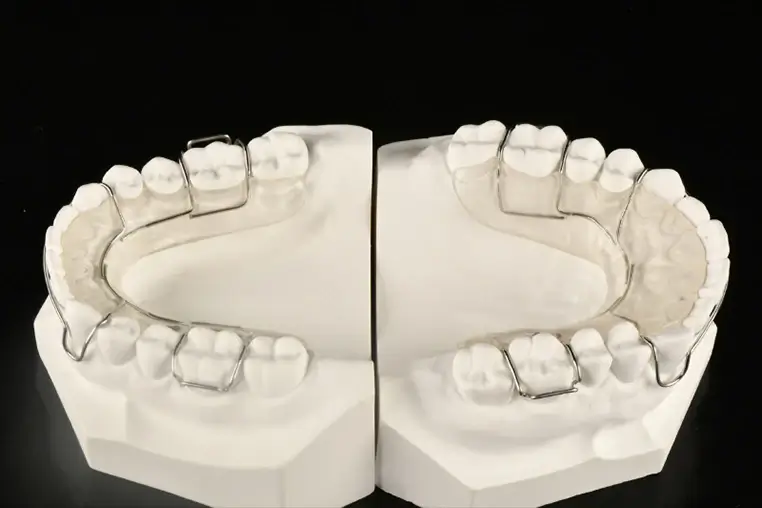
The Hawley retainer is one of the most traditional orthodontic retention appliances.
It consists of:
- An acrylic baseplate
- Stainless steel labial wire
- Adjustable retention components
Although they are more visible than clear retainers, Hawley retainers offer several advantages:
- Excellent durability
- Adjustable design
- Long clinical lifespan
For laboratories, producing Hawley retainers requires skilled technicians capable of precise wire bending and acrylic processing.
Fixed Lingual Retainers
Fixed retainers, also known as bonded lingual retainers, are permanently attached to the lingual surfaces of teeth.
They are commonly used for:
- Lower anterior teeth
- High relapse risk cases
- Long-term orthodontic stability
These retainers are fabricated using multi-strand stainless steel wires or CAD/CAM-designed metal frameworks.
Because they require precise adaptation to the lingual surfaces, digital design tools are increasingly being used to improve accuracy.
Digital Workflow for Retainer Manufacturing
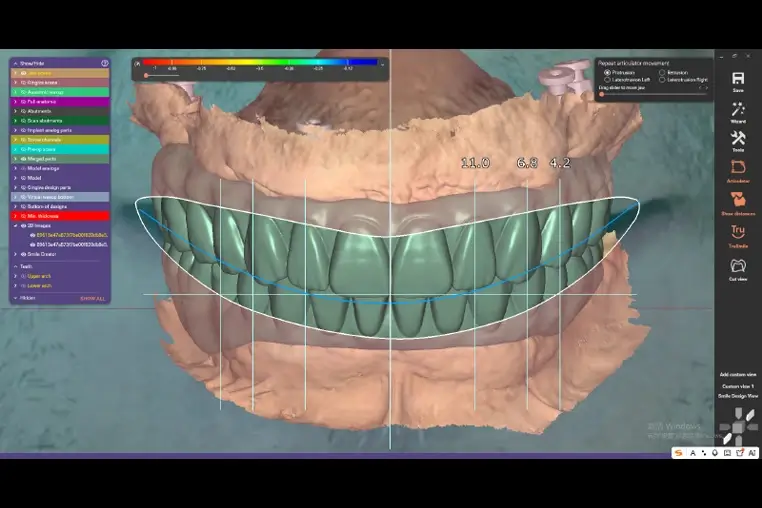
The adoption of intraoral scanning and CAD/CAM systems has dramatically improved retainer fabrication.
Modern workflows often include the following steps:
1. Digital Impression
Orthodontists capture digital impressions using scanners such as:
3Shape TRIOS
iTero
Medit scanners
These scanners produce high-resolution STL files, which are sent directly to dental laboratories.
Reference:
https://www.3shape.com/en/scanners
2. Digital Model Preparation
Technicians inspect and prepare the digital model by:
- Checking occlusion
- Removing artifacts
- Adjusting trimming lines
This step ensures accurate appliance fit.
At JoyDentalab, digital models are reviewed before fabrication to reduce the risk of retainer distortion or poor adaptation.
3. Appliance Design and Fabrication
Depending on the retainer type:
Clear retainers may involve:
- 3D printed models
- Thermoforming machines
- Laser trimming
Hawley retainers require:
- manual wire bending
- acrylic polymerization
Fixed retainers may involve CAD-designed lingual wires for improved adaptation.
Why Many Dental Labs Outsource Retainer Manufacturing
Many dental laboratories today choose orthodontic appliance outsourcing for practical and economic reasons.
From our experience at JoyDentalab, several key factors drive this trend.
Access to Specialized Equipment
Producing orthodontic retainers efficiently requires:
- thermoforming machines
- 3D printers
- digital trimming systems
- orthodontic wire forming tools
Outsourcing allows laboratories to access these technologies without major capital investment.
Skilled Orthodontic Technicians
Orthodontic appliances require technicians trained in:
- wire bending
- acrylic processing
- digital model preparation
Experienced teams significantly reduce the risk of appliance misfit or patient discomfort.
Faster Turnaround Times
Dedicated outsourcing laboratories often maintain specialized production lines for orthodontic appliances.
This allows faster production compared to laboratories where orthodontics is only a small portion of the workload.
JoyDentalab’s Professional Recommendations for Retainer Outsourcing
After years of working with international dental laboratories and orthodontists, JoyDentalab has identified several critical factors when selecting an outsourcing partner.
Ensure Digital Compatibility
A reliable laboratory should accept open digital formats, including:
STL
PLY
OBJ
Compatibility with scanners such as 3Shape, iTero, and Medit is essential for seamless case transfer.
Evaluate Quality Control Procedures
Before choosing a partner, laboratories should confirm:
- model inspection protocols
- material traceability
- appliance fit verification
High-quality retainers depend heavily on strict quality control systems.
Prioritize Communication and Case Support
Orthodontic cases often require design adjustments or technician feedback.
A good outsourcing partner should provide:
- case review before fabrication
- quick communication channels
- design consultation when needed
At JoyDentalab, we believe that effective communication between orthodontists and technicians is one of the most important factors for successful outcomes.
The Future of Orthodontic Retainers
Orthodontic retention is evolving rapidly as digital dentistry continues to advance.
Several trends are shaping the future of retainer fabrication:
- 3D printed retainers replacing traditional thermoforming
- AI-assisted orthodontic design
- more durable advanced thermoplastic materials
- integrated digital orthodontic workflows
These innovations will allow dental laboratories to produce appliances that are more accurate, durable, and comfortable for patients.
Conclusion
Orthodontic retainers are a critical component of successful orthodontic treatment. From clear retainers to Hawley appliances and fixed lingual retainers, each design requires precise fabrication and careful material selection.
As digital dentistry continues to transform the industry, many dental laboratories are turning to orthodontic appliance outsourcing to improve efficiency and maintain high quality.
At JoyDentalab, we believe that combining digital workflows, skilled technicians, and strict quality control is essential for producing reliable orthodontic retainers.
For dental laboratories and orthodontic clinics seeking a dependable manufacturing partner, working with an experienced outsourcing laboratory can significantly improve both workflow efficiency and treatment outcomes.