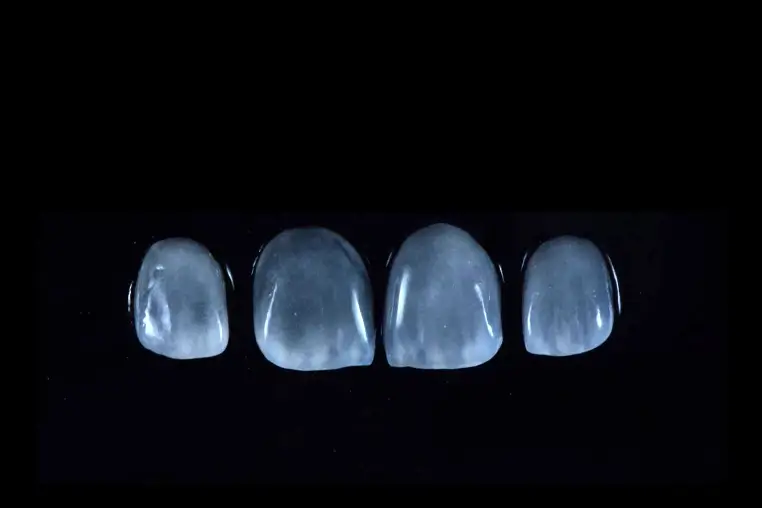
In global dental laboratory outsourcing, the margin for error is nonexistent. For commercial dental laboratories, implant clinics, and prosthodontic providers, outsourcing fixed dental prostheses quality control requires more than just competitive pricing—it demands absolute structural and dimensional consistency. Every microscopic deviation in a restoration’s margin, internal adaptation, or occlusal scheme directly correlates with chairside adjustment delays, compromised clinical longevity, or catastrophic material failure.
When an outsourced restoration fails to achieve a passive fit, the financial and reputational repercussions do not stop at the clinician’s chair; they ripple backward, eroding the upstream laboratory’s brand equity. At JoyDentalab, we treat quality assurance not as a final cosmetic inspection, but as an active, phase-by-phase manufacturing science.
To guarantee that every zirconia, ceramic, and metal-composite restoration meets international clinical standards before dispatch, we enforce a strict 12-Step Fixed Dental Prostheses Quality Control Protocol. This technical deep-dive outlines the engineering mechanisms, biological justifications, and verification workflows that safeguard your restorations from digital design to global delivery.
The Cost of Marginal and Occlusal Discrepancies: A Clinical-Manufacturing Analysis
To appreciate the necessity of a multi-stage fixed dental prostheses quality control protocol, one must examine the chain of causality when a digital dental laboratory allows sub-nominal restorations to exit the production floor.
- Low-Resolution Milling/Improper Sintering: Micro-steps left by worn tools or incomplete thermal transformation alter the intended geometry.
- Marginal Gaps and Internal Discrepancies: Restoration fails to seat cleanly, creating a physical ledge or gap exceeding 120 microns.
- Bacterial Infiltration and Micro-leakage: Oral fluids and acidogenic bacteria penetrate the open space.
- Luting Cement Washout: The exposed luting agent dissolves under hydrolytic degradation.
- Secondary Caries, Periodontal Inflammation, and Abutment Failure: The tooth structure rots beneath the crown, leading to biological failure.
1. The Microstructural Consequences of Poor Marginal Adaptation
The long-term clinical success of fixed prosthodontics depends heavily on the marginal gap width at the restoration-abutment interface. The maximum acceptable limit for marginal adaptation historically ranges between 50 microns and 120 microns. When a 5-axis CAD/CAM milling system utilizes worn diamond or carbide burs, or when a sintering furnace operates with an uneven thermal curve, the resulting crown or bridge coping exhibits non-homogeneous shrinkage or edge chipping.
The immediate clinical consequence is the acceleration of cement washout. As oral fluids infiltrate the marginal micro-gap, the exposed luting agent undergoes hydrolytic degradation and dissolves. This creates a stagnation zone for acidogenic biofilms, inducing secondary caries (recurrent decay) beneath the restoration margin and triggering localized chronic periodontitis or abutment failure.
2. Occlusal Hyper-Occlusion and Accelerated Fatigue Failure
Inadequate validation of static and dynamic occlusion during the laboratory stage introduces localized stress concentration. If a monolithic zirconia bridge or lithium disilicate (E.max) restoration is delivered with hyper-occlusion, the clinical and mechanical outcomes are severe:
- Biological Impact: Acute periodontal ligament (PDL) trauma, tooth mobility, secondary occlusal trauma, and temporomandibular joint (TMJ) discomfort.
- Mechanical Impact: Rapid fatigue failure of the material. While high-translucency zirconia possesses high initial flexural strength, localized stress propagation on unpolished or poorly adjusted occlusal surfaces triggers a spontaneous phase transformation from tetragonal to monoclinic crystal structures. This destabilization induces micro-cracking and eventual catastrophic structural fracture under cyclic masticatory loading.
The JoyDentalab 12-Step Fixed Dental Prostheses Quality Control Process
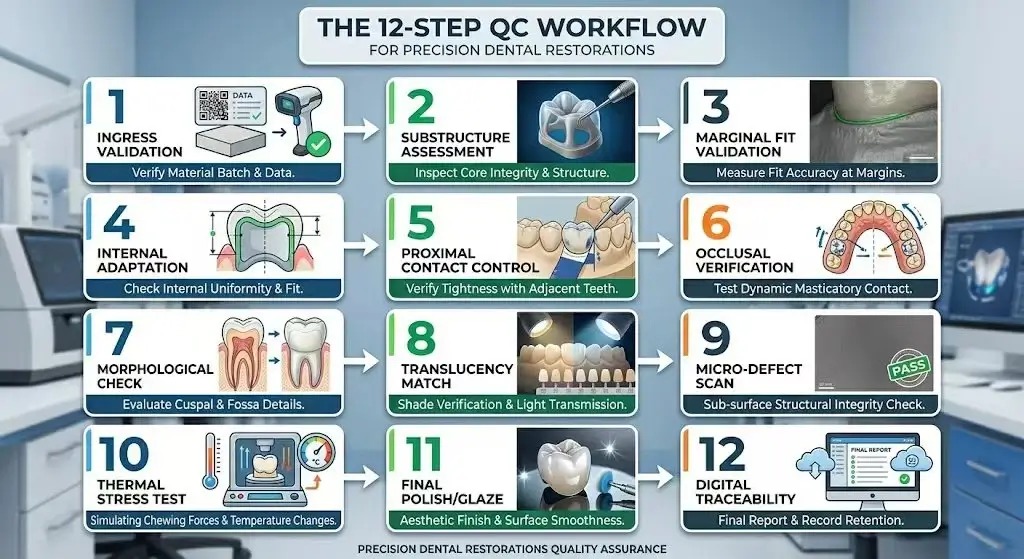
To intercept these failure modes, JoyDentalab subjects every fixed restoration to an intensive, 12-stage inspection pathway that bridges digital validation software with elite analog craftsmanship. The execution of a comprehensive fixed dental prostheses quality control strategy ensures that errors are captured during production rather than at the chairside.
Phase I: Ingress and Structural Integrity Validation
1. Digital Ingress Scan and Model Suitability Verification
Upon receipt of master models (whether poured from elastomeric impressions or transmitted as raw intraoral scan STL/PLY files), the data undergoes a visual and digital audit. Technicians verify the clarity of the preparation finish line (chamfer or shoulder design). If undercuts, bubbles, or digital artifacts are detected, the file is flagged, and the client laboratory is contacted immediately to resolve the data discrepancy before production begins.
2. Raw Substructure and Framework Assessment
Post-milling and prior to final sintering (for zirconia) or casting/laser-sintering (for metal frameworks), the green-state substructure is audited under 10x magnification. Digital calipers verify wall thickness to ensure compliance with minimum material thresholds (e.g., greater than or equal to 0.5 mm for monolithic zirconia; greater than or equal to 0.3 mm for metal copings) required to resist functional masticatory forces.
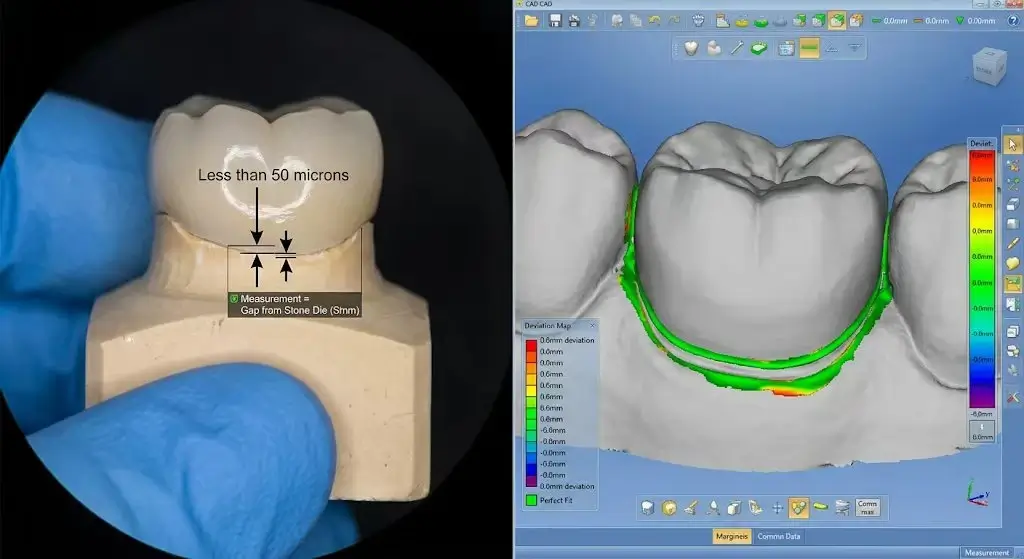
3. Microscopic Marginal Fit Validation
Following full sintering or casting, the restoration is seated on its master die. A dedicated QC technician inspects the entire 360-degree perimeter under a high-power dental laboratory microscope. The restoration must demonstrate absolute marginal integrity with no over-extensions (positive steps) or short margins (negative steps), maintaining the marginal gap strictly within our internal standard of less than 50 microns. Maintaining this benchmark is the cornerstone of our fixed dental prostheses quality control program.
Phase II: Functional and Biomechanical Adjustments
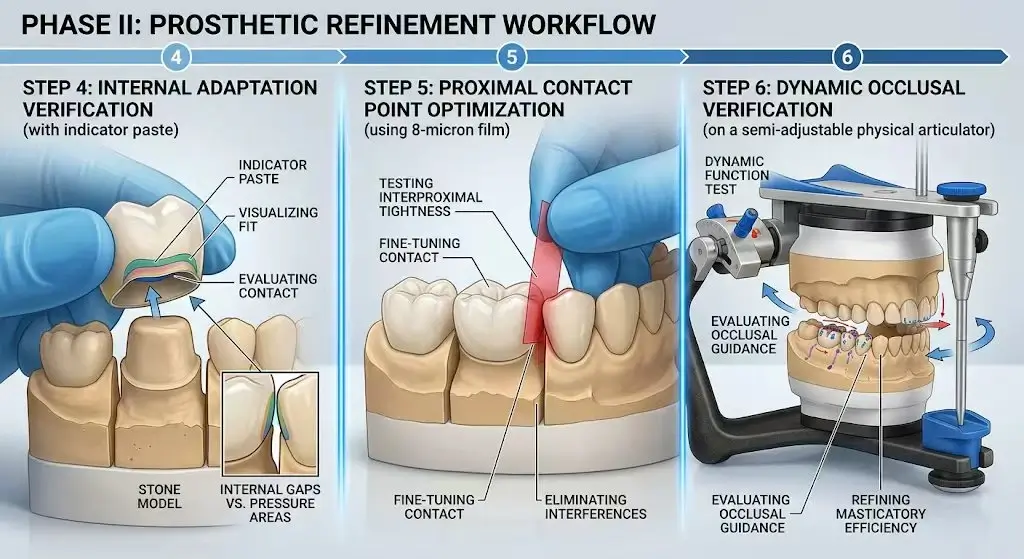
4. Internal Adaptation and Die Spacer Verification
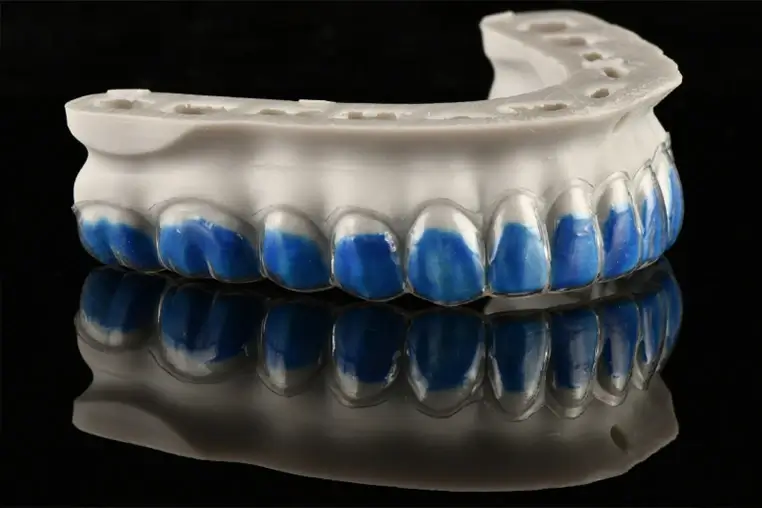
Using low-viscosity indicator paste or digital fit-checking silicone, the internal aspect of the crown or bridge coping is analyzed. Any internal binding points that prevent complete, passive seating are identified and precisely relieved with ultra-fine diamond burs. This guarantees an even distribution of the luting cement gap, maximizing retention without inducing tensile stress within the restoration upon seating.
5. Proximal Contact Point Optimization
Proximal contacts are adjusted to strike a precise clinical balance: they must be tight enough to prevent food impaction and subsequent interproximal periodontal breakdown, yet passive enough to allow smooth insertion without shifting adjacent teeth or deflecting the prosthesis during seating. This is verified using ultra-thin 8-micron articulating film and dental floss on solid, un-sectioned models.
6. Dynamic Occlusal Verification
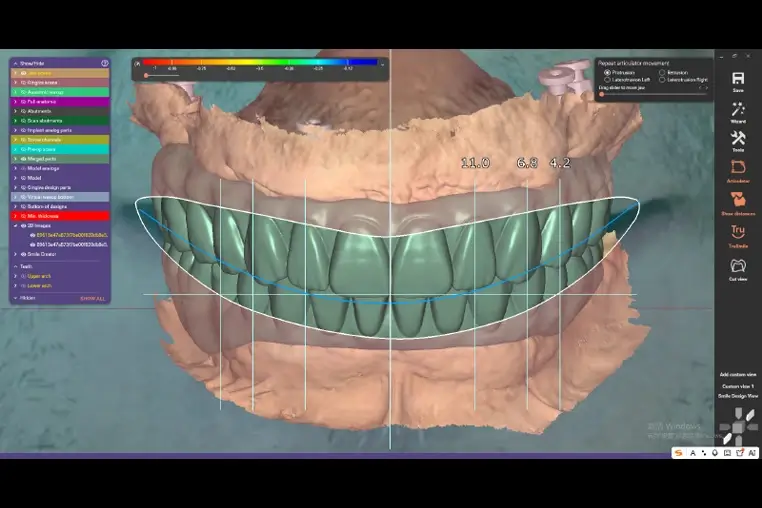
The prosthesis is mounted on a semi-adjustable or fully digital virtual articulator to simulate centric occlusion, as well as lateral excursive and protrusive movements (canine guidance/group function). We adjust the restoration to eliminate any premature contacts or balancing-side interferences, preserving the longevity of both the prosthesis and the opposing dentition. Our technicians implement this step to maintain strict fixed dental prostheses quality control across dynamic paths.
Phase III: Esthetics and Material Engineering
7. Anatomical and Morphological Evaluation
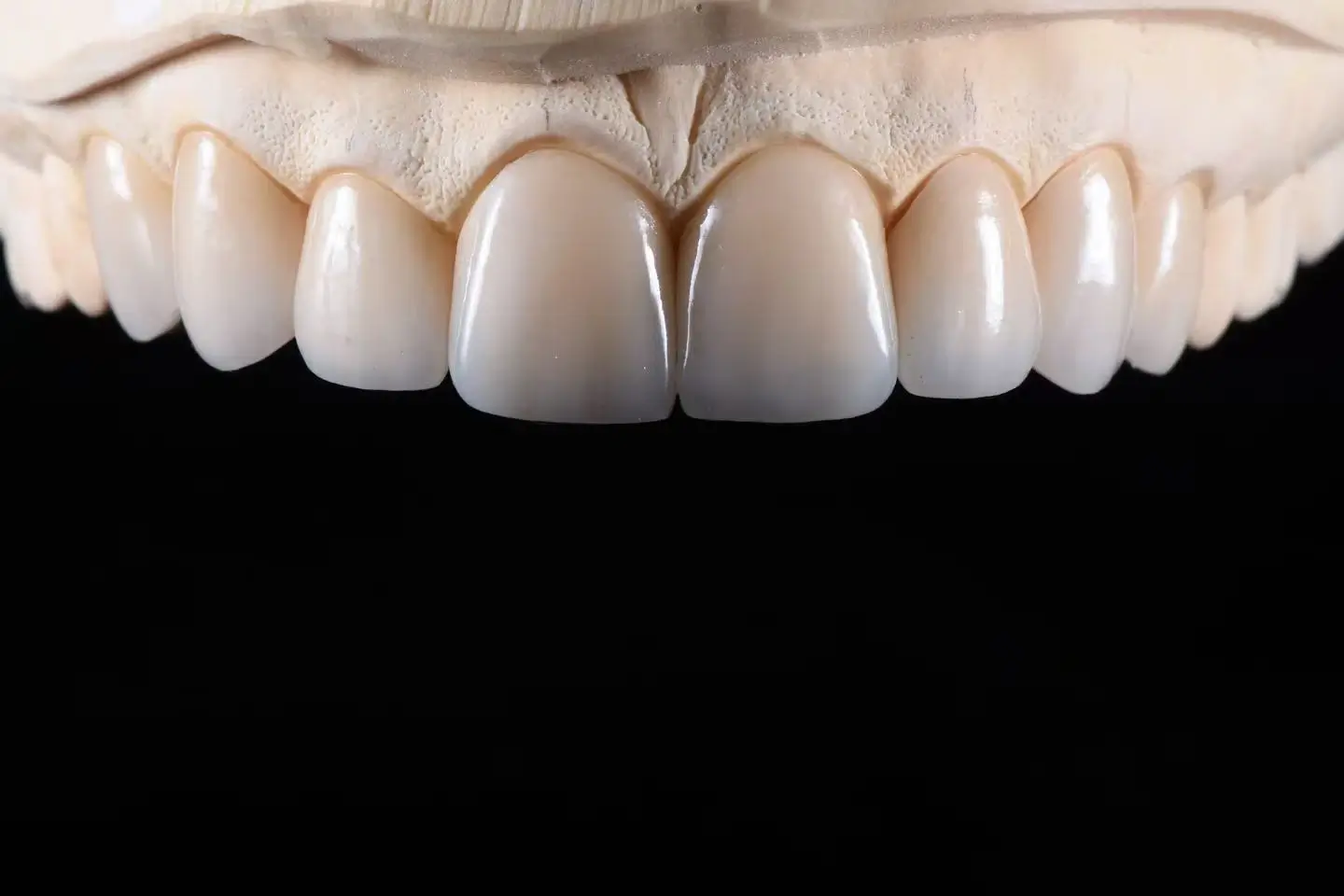
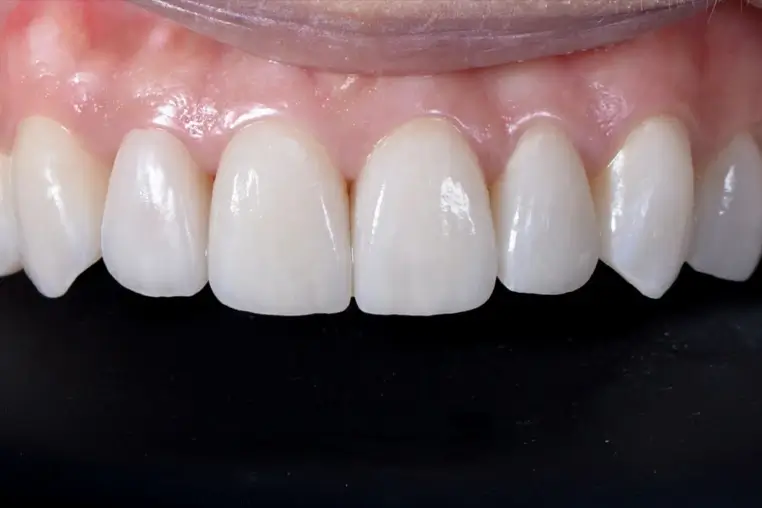
Our senior dental ceramists evaluate the specific tooth morphology, ensuring the primary, secondary, and tertiary anatomy match the patient’s age and the contralateral teeth. Micro-grooves, developmental lobes, and marginal ridges are carved to blend naturally into the oral environment while facilitating proper food deflection during mastication.
8. Shade, Translucency, and Chroma Match
Using standardized dental operatory lighting (5500 K daylight equivalent) and digital spectrophotometers, the restoration’s shade is verified against the prescribed guide (e.g., VITA Classical or 3D-Master). For high-end fixed prostheses like Zirconia Layered Crowns or E.max Veneers, multi-layer translucency gradients are validated to ensure the incisal third mimics natural enamel opalescence.
9. Micro-Defect and Fracture Scanning
All ceramic and zirconia restorations undergo an intensive transillumination and ultra-high-resolution optical scan to detect internal micro-cracks, porosity, or delamination between the core and veneering ceramics. This step catches sub-surface structural defects that could propagate into a catastrophic fracture under cyclic intraoral loading, reinforcing the reliability of our fixed dental prostheses quality control system.

Phase IV: Post-Processing and Traceability
10. Thermal Stress and Glaze Testing
Porcelain-fused-to-metal (PFM) and layered zirconia restorations (PFZ) are subjected to controlled thermal cycles to ensure that the Coefficient of Thermal Expansion (CTE) between the core material and the veneering porcelain is perfectly harmonized. This eliminates internal residual stresses that cause unexpected veneering porcelain chipping.
11. Surface Texturing and Mechanical Polish
The restoration undergoes its final finishing stage. For monolithic zirconia restorations, the occlusal surfaces are mechanically polished to a high-gloss, mirror finish (less than 0.2 microns surface roughness). Clinical research proves that highly polished zirconia is significantly less abrasive to opposing natural enamel than an unpolished, glaze-only surface, which can quickly wear down opposing teeth if the glaze layer erodes.
12. Final Digital Scan Verification and Traceability Logging
Before the FDP is cleared for packaging, it is scanned one final time to generate a digital twin for our quality assurance database. We log the material batch number, milling machine ID, sintering furnace log, and the signatures of the technicians responsible for each step. This total traceability guarantees complete accountability for every single restoration that leaves JoyDentalab, finalizing our comprehensive fixed dental prostheses quality control regimen.
Global Logistics and Delivery Infrastructure
A perfect restoration is only valuable if it arrives undamaged and on schedule. JoyDentalab has engineered a resilient international supply chain tailored for the demanding timelines of modern commercial dental laboratories.
- Packaging Protocol: Multi-tier shock-absorption: Sealed, dust-free anti-static membranes; custom-molded high-density foam enclosures; impact-resistant outer shipping containers to isolate restorations from physical and thermal shock.
- Global Network Couriers: Tier-1 express air freight infrastructure: DHL Express, FedEx Priority, and UPS Worldwide Saver.
- Turnaround Time: 7 to 14 business days globally (including custom clearance windows), varying by case complexity (e.g., single monolithic crown vs. multi-unit full-arch implant bridge).
- Tracking Support: Real-time tracking links pushed directly to the partner laboratory’s dashboard, with automated customs declaration filing to eliminate entry-port delays.
Why Strategic Labs and Clinics Outsource to JoyDentalab
Mid-sized to large commercial dental laboratories globally face identical constraints: escalating local labor costs, a shortage of highly skilled dental technicians, and the massive capital expenditure required to constantly upgrade 5-axis milling machines and 3D printers.
By partnering with JoyDentalab as your high-end digital outsourcing hub, you instantly inherit an enterprise-level manufacturing infrastructure:
- Drastic Remake Reduction: Our strict fixed dental prostheses quality control protocol keeps our internal and external remake rate below 1.5%, saving your lab thousands of dollars annually in shipping and model re-pouring costs.
- Predictable Workflow Stability: By sending your digital intraoral scans (IOS) or desktop scan STL files to us, you achieve consistent, daily manufacturing output without worrying about local staffing shortages or machine downtime.
- True Prosthodontic Expertise: Every department at JoyDentalab is led by master technicians who understand clinical biology and manufacturing mechanics. We don’t just execute CAD files; we optimize them for long-term restorative success.
Technical FAQ Section
Q1: How does JoyDentalab manage the shrinkage factor of zirconia to ensure absolute marginal fit?
Every batch of zirconia discs possesses a unique, manufacturing-specific shrinkage coefficient (typically around 20% to 25%). Our CAD/CAM nesting software reads the barcode of each specific disc, adjusting the enlargement scale factor down to four decimal places prior to 5-axis dry milling. Furthermore, our sintering furnaces are calibrated weekly using state-of-the-art thermal rings to ensure uniform heat distribution, preventing distortion along multi-unit bridge spans. A highly calibrated sintering cycle represents a critical juncture in our overall fixed dental prostheses quality control process.
Q2: Why does JoyDentalab emphasize mechanical polishing over simple glaze firing on occlusal surfaces?
Glaze material is essentially a low-fusing glass matrix that can wear away within 6 to 12 months under functional mastication. Once the glaze wears off, an unpolished zirconia surface acts like sandpaper against opposing dentition. By mechanically polishing all functional areas to a surface roughness of Ra less than 0.2 microns, the restoration remains highly biocompatible and exceptionally gentle on opposing natural enamel over the long term.
Q3: What quality control measures are in place for multi-unit, implant-supported fixed dental prostheses?
Implant-supported restorations demand a level of precision known as passive fit. If a multi-unit implant bridge lacks a passive fit, tightening the prosthetic screws introduces severe strain to the implant fixtures, which can lead to bone loss, screw loosening, or component fracture. JoyDentalab verifies all multi-unit implant cases using high-precision non-yielding master stone models or verified digital scan bodies, confirming the passive seat of the framework via the “one-screw test” before final ceramic application.
References and Peer-Reviewed Trust Literature
- Marginal Fit Standards: The Journal of Prosthetic Dentistry. “Evaluation of the marginal fit of various ceramic and CAD/CAM fixed dental prostheses.” https://www.thejpd.org/article/S0022-3913(13)00155-2/fulltext
- Zirconia Wear Mechanics: International Journal of Prosthodontics. “The wear of human enamel opposing monolithic zirconia with different surface finishes.” https://www.ncbi.nlm.nih.gov/pubmed/22299243
- Biological Implications of Micro-gaps: American Dental Association (ADA) Center for Scientific Research. “Microleakage, cement dissolution, and secondary caries formation at the restorative interface.” https://www.ada.org/en/science-research
- CAD/CAM Accuracy Matrix: Wikipedia: Digital Dentistry & CAD/CAM Dentistry. Structural overview of subtractive manufacturing and accuracy parameters in restorative laboratory medicine. https://en.wikipedia.org/wiki/Computer-aided_design_and_computer-aided_manufacturing_in_dentistry